


Is Your 1937 D Buffalo Nickel Real? Expert Authentication Guide for the Famous 3-Legged Variety
January 16, 2026Preserving History: Expert Conservation Techniques for the Rare 1937-D Buffalo Nickel (Including the 3-Legged Variety)
January 16, 2026
Condition Is Everything: The Art of Grading the 1937-D Buffalo Nickel
In numismatics, condition isn’t just important – it’s everything. When examining Buffalo Nickels, the difference between “good” and “mint condition” can turn pocket change into a museum piece. The 1937-D issue offers one of our hobby’s greatest treasure hunts, where a single missing leg transforms an ordinary nickel into a five-figure rarity. As a collector who’s handled hundreds of these Western icons, I’ll show you how to spot the telltale signs that separate common coins from numismatic legends.
Historical Significance of the 1937-D Buffalo Nickel
James Earle Fraser’s masterpiece transports us to America’s frontier spirit every time we hold one. Minted during the Great Depression’s depths, 1937-D nickels emerged from Denver with a secret hiding in plain sight. While millions bore the standard four-legged buffalo, a handful contained an error that would ignite collector passion for generations: the legendary 3-Legged variety.
Here’s where history gets deliciously ironic. Mint workers polishing clash marks from dies accidentally sculpted our hobby’s Holy Grail. With each stroke of the abrading tool, they erased the buffalo’s front leg – transforming routine maintenance into numismatic alchemy. Today, these “mistakes” command auction prices that would make 1937’s bank tellers faint!
Identifying Key Markers: The 3-Legged Variety and Beyond
The Die Marriage That Created a Legend
Seasoned Buffalo specialists recognize three distinct chapters in this drama:
- Early Die State (4-Legged): Pristine details with full leg musculature
- Transitional State (3.5-Legged): Ghostly leg remnants amid polishing streaks
- Final State (3-Legged): Complete amputation with dramatic “stump” effect
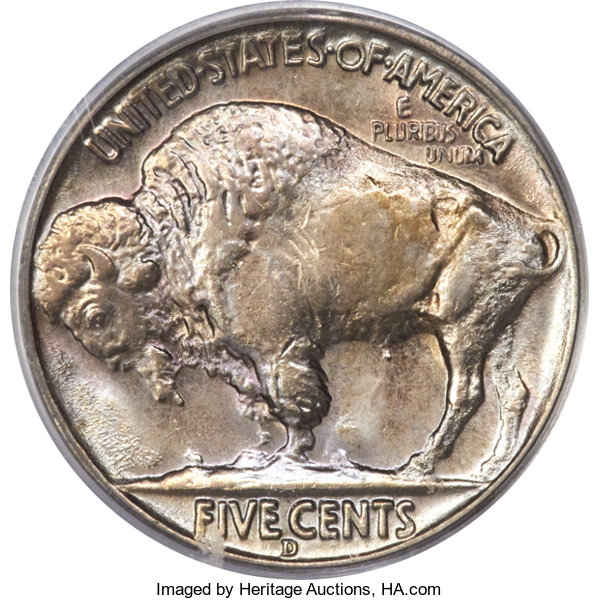
As Bill Fivaz famously argued, the transitional pieces deserve their own classification. This haunting image captures why:
Critical Die Markers for Authentication
When that adrenaline hits – “Did I find one?” – check these authentication points:
- Mintmark Personality: Denver’s “D” tilts like a cowboy hat on the mound
- E PLURIBUS UNUM Intimacy: Words cozy up to the buffalo’s back
- Polishing Scars: Parallel “plow lines” in fields from abrasive tools
- Leg Forensics: Smooth surgical removal versus wear patterns
As @BuffaloIronTail observed on CoinTalk, “The best specimens show complete leg removal but retain frosty luster – like the buffalo’s standing on tiptoe!”
Grading Factors That Determine Value
Wear Patterns: Reading the High Points
Buffalo Nickels surrender first to friction at these critical zones:
- Obverse: Feather tips (always check the second feather!) and cheekbone ridge
- Reverse: Hip joint and shoulder hump apex
That beautiful PCGS slab tells a story through numbers. An MS-60 sleeps peacefully with bag marks but no wear, while an AU-50 shows flattening that whispers “I’ve traveled.” For 1937-D, each grading increment multiplies value exponentially:
| Grade | 4-Legged Value | 3-Legged Value |
|---|---|---|
| G-4 | $1.50 | $300 |
| VF-20 | $8 | $1,200 |
| MS-63 | $85 | $15,000 |
Luster: The Surface Story
Original mint bloom separates survivors from the circulated herd. On properly stored 1937-D nickels, we hunt for:
- Cartwheel Sorcery: That mesmerizing swirl when rotated under light
- Denver’s Handshake: Satiny fields with delicate frost on devices
- Toning Magic: Rainbow hues add 20% premiums; black spots deduct 30%
NGC reports that 90% of raw “3-Leggers” arrive with stripped luster – heartbreaking evidence of misguided cleaning attempts.
Strike Quality: Detail Matters
Buffalo Nickels often disappoint with mushy strikes, particularly on:
- Hair braid details (the “dead zone” below the ear)
- Buffalo’s nostril and hoof lines
Premium specimens make us catch our breath with:
- Horn fully separated from head (no “blob” effect)
- Tail hairs visible as individual strands
- “FIVE CENTS” standing proud against the mound
Eye Appeal: The X-Factor
PCGS’s Strike-Charm rating (1-5) acknowledges what we all feel: technical grade doesn’t always equal heart-throbbing beauty. A coin possessing:
- Electric toning that frames the design
- Perfectly centered strike
- Fields kissed by just one or two faint marks
Can command double guide prices. That’s why two MS-65 “3-Leggers” might sell for $12,000 versus $25,000 – one merely graded, the other transcendent.
PCGS/NGC Standards: Certification Nuances
Third-party services approach 1937-D varieties with surgeon-like precision:
- Variety Hall of Fame: “1937-D 3 Legs” proclamation on label
- Transitional Whisperers: “Die Polish” footnotes for 3.5-leg specimens
- Surface Truth-Telling: “Environmental Damage” for corroded pretenders
Population reports tell a stark truth: just 132 PCGS-certified genuine 3-legged specimens exist across all grades, with only 8 breaking the MS-64 barrier. NGC numbers echo this scarcity, making properly graded examples true blue-chip collectibles.
Value Guide: From Pocket Change to Portfolio Centerpiece
The 1937-D Buffalo Nickel market dances to three distinct rhythms:
1. Common Circulation Strikes (4-Legged)
- G-VG: $1.50-$3 (Perfect for album fillers)
- VF-XF: $5-$15 (Type collector sweet spot)
- MS-60 to MS-63: $50-$150 (Gateway to uncirculated collecting)
- MS-65+: $400-$1,200 (Conditional rarity with strong eye appeal)
2. Transitional Die States (3.5-Legged)
- VF-XF: $250-$750 (Conversation-starting oddities)
- MS-63: $1,500-$2,500 (Die state specialists’ prey)
3. Full 3-Legged Varieties
- G-VG: $300-$600 (Entry to the error elite)
- VF-XF: $1,000-$3,000 (Serious collector territory)
- AU-55: $5,000-$7,000 (Balance of affordability and detail)
- MS-63: $12,000-$18,000 (Investment-grade material)
- MS-65: $35,000-$50,000 (The ultimate Buffalo trophy)
As @kuwegg57 demonstrated on CU Forum, eagle-eyed collectors might still discover new die states – though none yet rival our beloved “Tripod.”
Conclusion: Why This Coin Captures Collector Imagination
The 1937-D 3-Legged Buffalo Nickel embodies our hobby’s greatest thrills: historical accident, visual drama, and breathtaking rarity. While grading standards evolve, one truth remains – in Buffalo Nickels, a millimeter of missing leg can transform metal worth five cents into patrimony worth five figures. Always submit potential finds to PCGS or NGC, study certified examples like Rosetta Stones, and remember: numismatic glory favors those who scrutinize details others overlook. After all, these 21 grams of nickel and copper don’t just tell America’s story – they invite us to become part of it.
Related Resources
You might also find these related articles helpful:
- Is Your 1937 D Buffalo Nickel Real? Expert Authentication Guide for the Famous 3-Legged Variety – In the thrilling hunt for numismatic treasures, few prizes quicken a collector’s pulse like the legendary 1937-D &…
- Unearthing Hidden Fortune: The 1937-D Buffalo Nickel Error Hunter’s Field Guide – Most collectors walk right past the tiny miracles hiding in plain sight – the mint-made anomalies that transform p…
- The 1937-D Buffalo Nickel: Depression-Era Artistry and the Famous Three-Legged Error – The Artifact That Encapsulates an Era Hold a 1937-D Buffalo Nickel in your palm, and you’re not just feeling cool …
