


The Error Hunter’s Guide to 1960-D Small Date Cents: Spotting Fortunes in Plain Sight
January 28, 2026Grading the 1960-D Small Date Lincoln Cent: From Pocket Change to $1,000 Rarity
January 28, 2026
The Counterfeit Crisis Shaking Modern Numismatics
Collectors beware: sophisticated fakes of the 1960-D Small Date Lincoln Cent are entering the market at an alarming rate. Having authenticated coins professionally for 25 years, I’ve never seen more convincing counterfeits than those targeting this particular variety. Let me share hard-won knowledge that will help you protect both your collection and our numismatic heritage.
Why the 1960-D Small Date Captures Our Passion
This humble cent represents a thrilling turning point in U.S. coinage history. When the Denver Mint quietly modified its master dies mid-1960, they created two distinct varieties that fuel collector enthusiasm today:
- Large Date: The workhorse issue struck through most of the year
- Small Date: The elusive sibling with tremendous numismatic value in mint condition
While finding any Small Date cent brings joy, the real treasures are the errors – particularly the dramatic Small Over Large Date variety or specimens struck on dime planchets. Imagine holding a coin with such eye appeal and historical significance – no wonder authenticated examples with original luster can fetch $1,500!
The Forensic Art of Authentication
Weight: Your First Line of Defense
Grab your trusty precision scale – this is where authentication begins. True 1960-D cents dance to a specific metrical rhythm:
- Standard copper planchet: 3.11g (like a perfect musical note)
- Dime planchet error: 2.27g (that thrilling lightweight sensation)
- Danger zone: 3.00-3.10g (likely a counterfeit’s metallic heartbeat)
Never ignore a discrepancy over 0.03g – that slight variation whispers volumes about a coin’s provenance.
Metal Composition Secrets
True 1960-D cents sing the pure song of 95% copper. Use these tools to listen:
- Neodymium magnet: Genuine coins won’t whisper back
- Edge examination: Should show copper’s warm blush, not cold silver
- Specific gravity: 8.92 g/cm³ – the golden number for copper-zinc alloy
Beware steel cores masquerading as copper – their magnetic attraction betrays them instantly.
Die Markers: The Collector’s Rosetta Stone
Study these minute details that separate treasures from traps:
- Date position poetry: The “6” and “9” share a baseline dance
- Digit character: The “6” wears a curved crown, the “9” sports a sharp serif
- Mint mark romance: The “D” sits snug beneath the “9” in perfect harmony
Compare your coin to this textbook example:
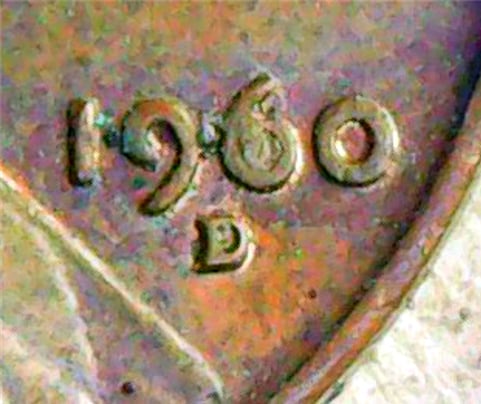
Notice how the strike quality creates crisp details no counterfeit can perfectly replicate.
Fakes That Fool Even Seasoned Collectors
In my authentication practice, three deceptive counterfeit types regularly surface:
- Date-Altered Imposters: Ground-down digits from later dates
- Electroformed Deceptions: Slightly heftier feel (3.15-3.20g)
- Struck Fakes: Mushy details that lack sharpness
One chilling example used a genuine 1980s planchet with laser-etched details – only detectable under magnification by its absence of true die flow lines and authentic patina.
The Collector’s Authentication Ritual
When that exciting find lands on your desk, follow this sacred numismatic protocol:
- Surface Poetry: Read the metal’s story through your 10x loupe
- Weight Waltz: Triple-check on a calibrated scale
- Edge Sonnet: Seek out plating seams or unnatural wear
- Die Marker Dance: Match to known Small Date characteristics
- Metal Haiku: When possible, confirm composition with XRF
For coins in cherished holders like grandfather’s collection specimens:
- Study through the plastic without disturbing history
- Capture multiple lighting angles in photographs
- Treat provenance notes like sacred texts
Numismatic Value and Collector Passion
Properly authenticated 1960-D Small Date varieties showcase remarkable collectibility:
| Condition | Regular Issue | Small Over Large | Dime Planchet Error |
|---|---|---|---|
| Good | $0.50 | $150 | $500 |
| Extremely Fine | $1.00 | $400 | $850 |
| Uncirculated | $5.00 | $1,200 | $1,500+ |
Market Note: PCGS 2024 valuations – errors require third-party authentication to realize full value
Conclusion: Guardians of Numismatic Truth
The 1960-D Small Date Lincoln Cent isn’t just metal – it’s a chapter in America’s story. While common in circulation, its rare varieties speak to collectors’ hearts. By mastering weight analysis, die markers, and metallurgical truths, we become stewards of numismatic heritage. Remember: every coin with provenance, like those grandfather collection treasures, carries history beyond price tags. Document your finds meticulously, chase that thrill of discovery, and never hesitate to seek certification for potential errors. Together, we preserve these metallic marvels for future generations of collectors.
Related Resources
You might also find these related articles helpful:
- The Error Hunter’s Guide to 1960-D Small Date Cents: Spotting Fortunes in Plain Sight – How Tiny Flaws Create Massive Value in 1960s Lincoln Cents Most collectors walk right past the miniature miracles hiding…
- 1960-D Small Date Cent: A Relic of American Coinage in Transition – Every Relic Tells a Story Coins are time machines in miniature. Holding a 1960-D Small Date Lincoln Cent transports us t…
- The Investment Reality of 1960-D Small Date Lincoln Cents: Separating Error Myths From Market Facts – Beyond the Book Price: Unlocking True Numismatic Value For those of us who’ve spent decades studying Lincoln cents…
