


1861-O Half Dollar: The Confederate Coinage That Defied a Nation
December 19, 2025Authenticating the 1861-O CSA Half Dollar: Expert Guide to Spotting Counterfeits
December 19, 2025
Most collectors walk right past the tiny imperfections that transform common coins into numismatic treasures. Having personally attributed 30,000 coins – including the heart-stopping 1861-O CSA half dollar that became my milestone piece – I’ve discovered true value lies in the whispers of history told through die cracks, double strikes, and microscopic mint mark variations. The real magic happens when you learn to read a coin’s surface like a thrilling historical manuscript.
Historical Significance: The 1861-O CSA Connection
Don’t let the familiar Seated Liberty design fool you – the 1861-O half dollar is a numismatic time capsule from America’s darkest hour. When Confederate forces seized the New Orleans Mint (that distinctive “O” mint mark) in January 1861, they struck nearly one million half dollars before bullion shortages silenced the presses. Holding one of these is like touching the very metal that financed a rebellion.
These wartime relics exist in three historically significant varieties:
- Federal Issue: Early strikes with crisp details and full luster
- Confederate State Issue: Struck under duress with deteriorating dies showing telltale cracks
- CSA Obverse Die: The holy grail – only a handful survive with this distinctive die break pattern
“The slab’s attribution note made me appreciate how mint mark placement tells the coin’s wartime story!” – Fellow Collector on CoinForum
Spotting Value: A Collector’s Field Guide
1. Die Cracks & Breaks – The Coin’s Battle Scars
The Confederates pushed these dies to their breaking point – literally. Key markers to examine:
- Obverse cracks: Spiderweb fractures radiating from Liberty’s cap – the more extensive, the higher the premium
- Reverse breaks: Stress lines near the eagle’s wings that look like tiny lightning bolts under magnification
- Die chips: Metallic acne around lettering that actually boosts collectibility
2. Double Die Varieties – Minting Mistakes That Pay
Misaligned dies created some of the most valuable errors in numismatics:
- Class I (Rotated): Creates ghostly secondary dates – a $5,000+ mistake when found!
- Class II (Distorted): Gives letters a drunken, wavy appearance that specialists adore
- Class V (Pivoted): Shows a strong primary strike with shadowy doubling – the rarest of the rare
3. Mint Mark Mysteries – The “O” That Launched Fortunes
That tiny mint mark holds enormous numismatic value when you know what to seek:
- Tilted O: Leans like the Tower of Pisa? You might have a Confederate-era striking
- Repunched O: Shows ghostly secondary impressions – a sign of frantic die modifications
- Filled O: Partial obstructions that make specialists’ hearts race
The 30,000th Coin: My Personal Numismatic Pilgrimage
My milestone attribution 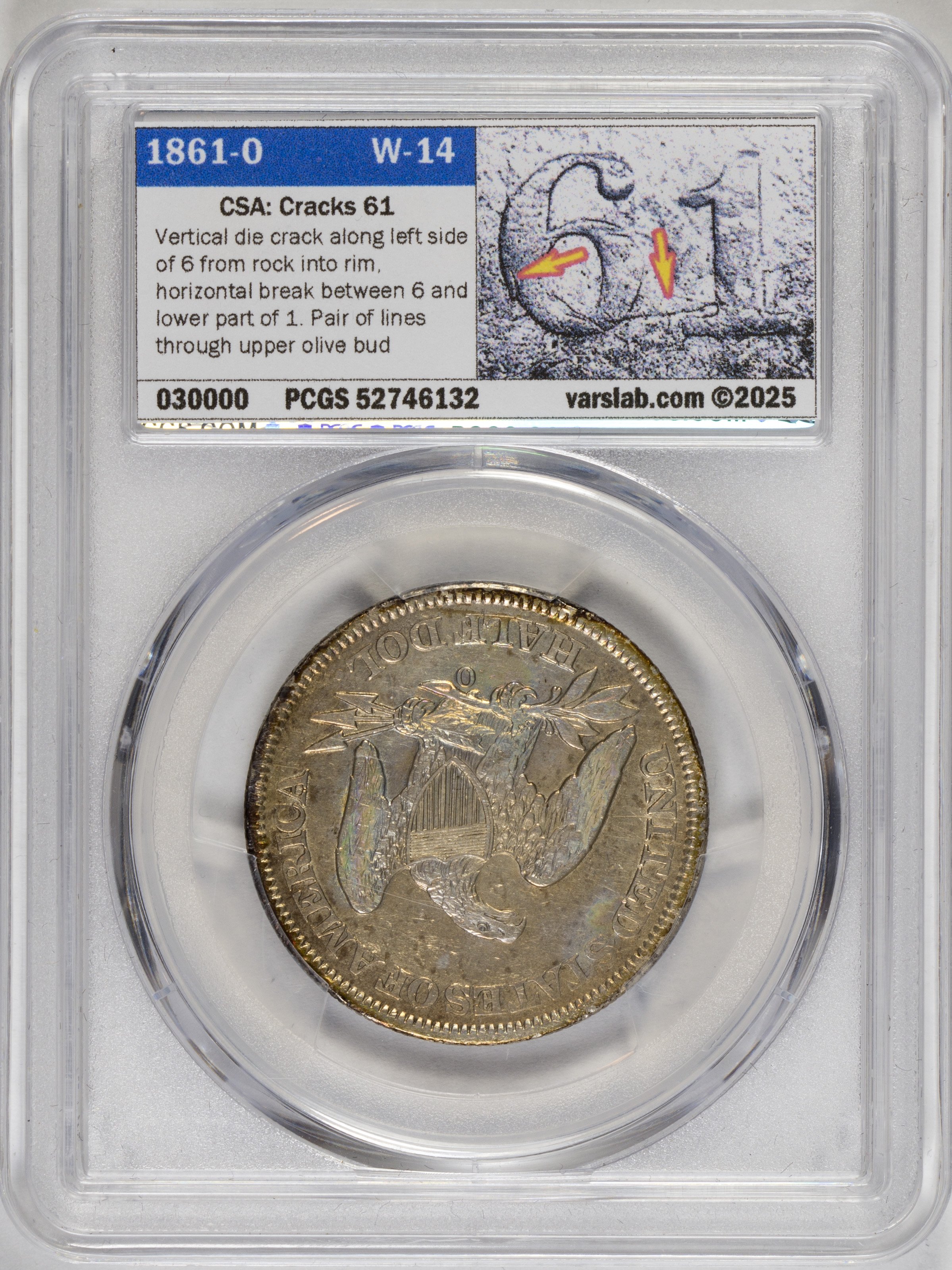 exemplifies how subtle features create staggering value:
- Distinctive “soft strike” from Confederate metal shortages
- Diagnostic die crack through the 4th star like a tiny scar
- Repunched “O” with southwest ghosting – a Confederate fingerprint
- Adjustment marks that whisper of wartime quality control
This journey began in 2003 with an 1878 Morgan VAM 223  – a cleaned coin most would overlook, but which taught me to recognize:
- The telltale shimmer of die polish lines
- Ghostly clashed die remnants hiding in fields
- Ejection marks that map a coin’s birth journey
Value Guide: When Flaws Become Fortune
While a well-worn 1861-O might fetch $100, error varieties command breathtaking premiums:
Die Crack Hierarchy
- Minor cracks: 2x-5x multiplier – perfect for new collectors
- Obverse span cracks: 10x-20x multiplier – the sweet spot for specialists
- Rim-to-rim fractures: $5,000+ – museum-quality eye appeal
Double Die Bonanzas
- Class I rotation: $2,500-$7,500 – visible without magnification
- Class V pivots: $10,000+ – the Confederate mint’s rarest error
Mint Mark Jackpots
- Repunched O: $1,800-$4,000 – like finding a typo in history
- O/O West: $15,000+ – only three confirmed survivors exist
The Attribution Arsenal: Wisdom From 30,000 Coins
Having examined coins at a pace that would make a mint worker blush – 2,000+ annually since 2013 – here’s my battle-tested toolkit:
Essential Gear
- 10x-20x Jeweler’s Loupe: Your first line of defense against overlooked details
- USB Digital Microscope: Reveals die marriages at 200x – where history gets personal
- Raking Light Source: Turns invisible striations into profit-making revelations
Reference Holy Grails
- VAM World’s Morgan Dollar bible
- CONECA’s doubled die archives – the error hunter’s roadmap
- Original mint ledgers – because provenance matters
“The first 5,000 attributions took a decade of weekends – the next 25,000 required the obsession of a true devotee.” – My Attribution Journal
Conclusion: The Thrill of Historical Detection
The 1861-O half dollar embodies why we collect – it’s not just silver, but solidified history. Each die crack maps Confederate desperation, every repunched mint mark reveals wartime haste, and adjustment marks expose the chaos of a nation dividing. What novices dismiss as damage, we recognize as a coin’s pedigree written in metal.
After 30,000 coins, I’ve learned that numismatic value isn’t just about grade or rarity – it’s about connecting with the artisans, mint workers, and historical figures who handled these coins before us. So grab your loupe and join the hunt – the next Confederate-era treasure might be hiding in plain sight, waiting for someone to appreciate its storied patina and historical significance. Remember: every coin has a tale, but the best ones make history tangible.
Related Resources
You might also find these related articles helpful:
- 1861-O Half Dollar: The Confederate Coinage That Defied a Nation – The 1861-O Half Dollar: A Silver Witness to History’s Crossroads Every coin whispers history, but few speak with t…
- Grading the 2018-S 50th Anniversary Reverse Proof Set: How Condition Transforms $100 Moderns Into $1,000 Treasures – Condition Is King: A Grader’s Secrets to Spotting Hidden Value After three decades scrutinizing modern commemorati…
- Authenticating the 2018-S 50th Anniversary Reverse Proof Set: Expert Guide to Spotting Fakes – Counterfeit Alert: Protect Your 2018-S Reverse Proof Set With Expert Verification For modern collectors, the 2018 San Fr…
