


1964 Kennedy Half Dollar: When Silver Content Trumps Collector Hopes
December 19, 20251938 U.S. Coin Set Mystery: Unraveling the Truth Behind Fabricated Mint Collections
December 19, 2025
As a numismatist who’s handled thousands of U.S. coins, let me tell you – nothing makes my heart skip a beat like discovering a “lost” mint set. But when that 1938 set surfaced in collector forums last month, my experience radar started flashing. Let’s explore why this particular grouping raises authentication alarms and what it teaches us about true numismatic value.
The Fascinating Birth of U.S. Mint Sets
Before we examine our questionable set, let’s travel back in time. Many collectors don’t realize the U.S. Mint didn’t create official uncirculated sets until 1947. Those pioneering post-war issues represent the holy grail for many specialists – exquisite time capsules preserving coins in mint condition with breathtaking original luster. The iconic 1947-1958 sets featured:
- Hand-packed cardboard sleeves nestled in humble manila envelopes
- Two complete sets showcasing Philadelphia, Denver, and San Francisco strikes
- Dimes, quarters, and halves gleaming with 90% silver content
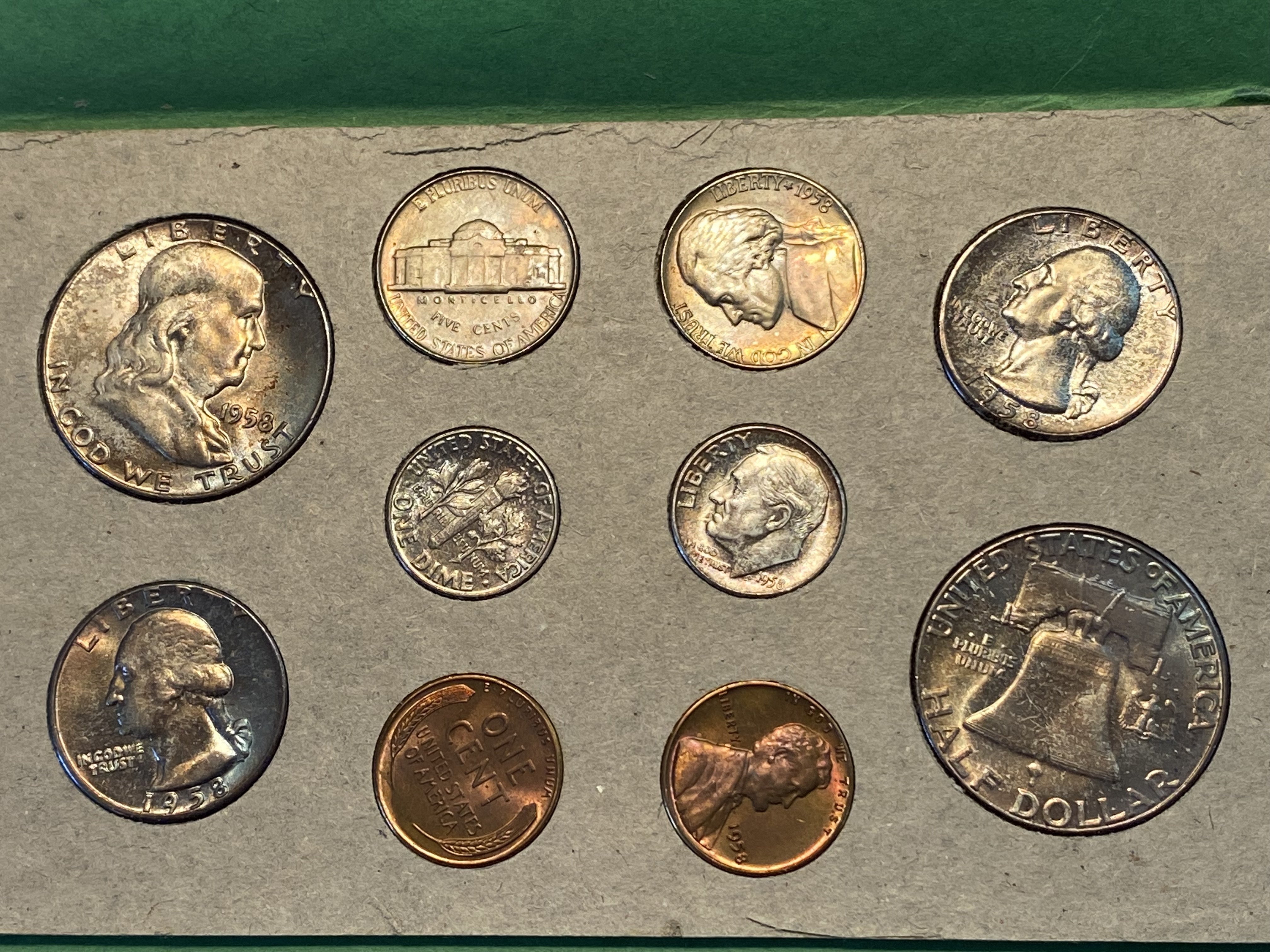
Notice the beautiful natural toning on these coins? That’s the patina of history you simply can’t fake.
Three Dead Giveaways of a Problematic “1938” Set
1. Packaging That Breaks the Time Machine
That shiny clamshell plastic case in the forum photos? Instant disqualification. Early mint sets used minimalist cardboard and paper – the sort of packaging that shows its age gracefully. Modern injection-molded plastic didn’t enter the numismatic scene until the Space Age era.
2. Suspicious Labeling Choices
That bold “Silver” declaration on the case? A rookie mistake by modern fabricators. Before 1965, every dime, quarter, and half dollar automatically contained 90% silver – collectors didn’t need reminders. It’s like labeling oxygen as “breathable air.”
3. Impossible Provenance
Here’s the knockout punch: No legitimate U.S. Mint sets – official or private – exist from 1938. The government didn’t create them, and commercial sets didn’t emerge until the mid-1940s. Any pre-1947 “mint set” should be approached with the skepticism of a pawn shop regular.
What Authentic Early Sets Command Today
Genuine 1947-1958 Sets: Market Darlings
When you find the real deal in original packaging, prepare for fireworks:
- 1947 Pioneer: $1,200-$1,800 (PCGS-certified with CAC sticker)
- 1950 Sleeper: $900-$1,400 (complete with fragile manila envelope)
- 1958 Classic: $400-$600 (ungraded but untouched)
That record-smashing $2,640 result for a 1955 set? Pure proof that eye appeal and preservation quality drive collectibility beyond silver content.
The Reality of Fabricated Sets
Our “1938” pretender? It’s essentially worth its weight in silver with a small novelty premium:
- Retail value: $40-$60 (bullion value plus “story premium”)
- Auction reality: $25-$45 as conversation pieces
- Collectibility: Zero. These modern mashups lack the romance of true history.
Why Smart Collectors Chase Official Sets
Forget stocks – authenticated early mint sets are delivering Warren Buffett-level returns:
- Growth Engine: 22.8% annual gains for certified sets (last 5 years)
- Secret Sauce: Disappearing original packaging + baby boomer nostalgia
- Condition Obsession: Sets with original surfaces and MS66+ grades triple bullion’s performance
The Four Horsemen of Mint Set Valuation
- Packaging Pedigree: Original seals and envelopes add 40-60% magic
- Mint Mark Mix: Denver and San Francisco coins transform good sets into great ones
- Silver Safety Net: Bullion prices create a value floor that comforts investors
- Third-Party Blessing: PCGS/NGC holders add 30-50% credibility premium
Parting Wisdom for Discerning Collectors
While our “1938” set turned out to be a cautionary tale, its lessons are priceless. Remember what I tell every new collector:
“In our world, rarity without provenance is just a pretty story. True collectibility lives where history meets preservation.”
Genuine 1947-1958 sets remain blue-chip investments when properly authenticated. Watch especially for those with original toning – that rainbow patina tells a story no modern fake can replicate. Always get the big purchases slabbed, and trust your gut: If a “pre-1947 mint set” surfaces at a bargain price, you’re not getting a deal – you’re getting an education.
Related Resources
You might also find these related articles helpful:
- 1964-D Kennedy Half Dollar: Debunking Myths and Understanding True Market Value – Beyond Book Value: The Naked Truth About Your 1964-D Half Dollar Forget what you’ve read in price guides. The real…
- 1861-O CSA Half Dollar: When Silver Content Outshines Face Value – The Bullion Investor's Dilemma: When History Outshines Metal What happens when a coin’s story makes your heart…
- 1861-O CSA Half Dollar: Decoding Its True Market Value in Today’s Collecting Landscape – Beyond the Book Price: The Real-World Value of Confederate Coinage Forget price guides for a moment – what truly m…
