


What is the Real Value of a 1939 Jefferson Nickel Weighing 4.012 Grams in Today’s Market?
January 8, 20261939 Nickel Error Hunter’s Guide: Decoding Acid Damage, Henning Fakes & True Rarities
January 8, 2026
The Relic That Speaks of Global Upheaval
Every coin whispers secrets of its era. When collectors unearthed that curious 1939 Jefferson nickel weighing just 4.012 grams, they weren’t just handling pocket change—they were holding a time capsule from America’s most volatile crossroads. Let’s explore why this humble five-cent piece, born as Hitler marched into Poland and Roosevelt battled the Great Depression, remains one of numismatics’ most captivating conversation starters.
Historical Significance: A Nation Between Depression and War
1939 wasn’t just another year—it was the world’s pressure cooker. While Europe plunged into war, America balanced on a knife’s edge: technically neutral yet ramping up wartime production, still scarred by economic depression yet testing New Deal solutions. This perfect storm shaped every aspect of U.S. Mint operations.
Nickel, that critical 25% alloy component, became a defense department darling—essential for armor plating and artillery. Though “war nickels” with silver wouldn’t debut until 1942, the metal squeeze had already begun. Enter Felix Schlag’s elegant Jefferson portrait, chosen over politicized alternatives as a stabilizing symbol. Its graceful Monticello reverse wasn’t just art; it was mint propaganda during turbulent times.
Minting History: Precision Under Pressure
The 1939 Jefferson nickel emerged from three mints:
- Philadelphia (no mint mark): The mother mint’s workhorse output
- Denver (D): Rocky Mountain precision strikes
- San Francisco (S): Scarcer issues with superior luster
With over 120 million struck, most examples circulated heavily. Yet specifications were exacting:
- Weight: 5.00 grams (±0.05g tolerance)
- Composition: 75% copper, 25% nickel—the last pure series before WWII changes
- Edge: Plain (a key anti-counterfeit feature)
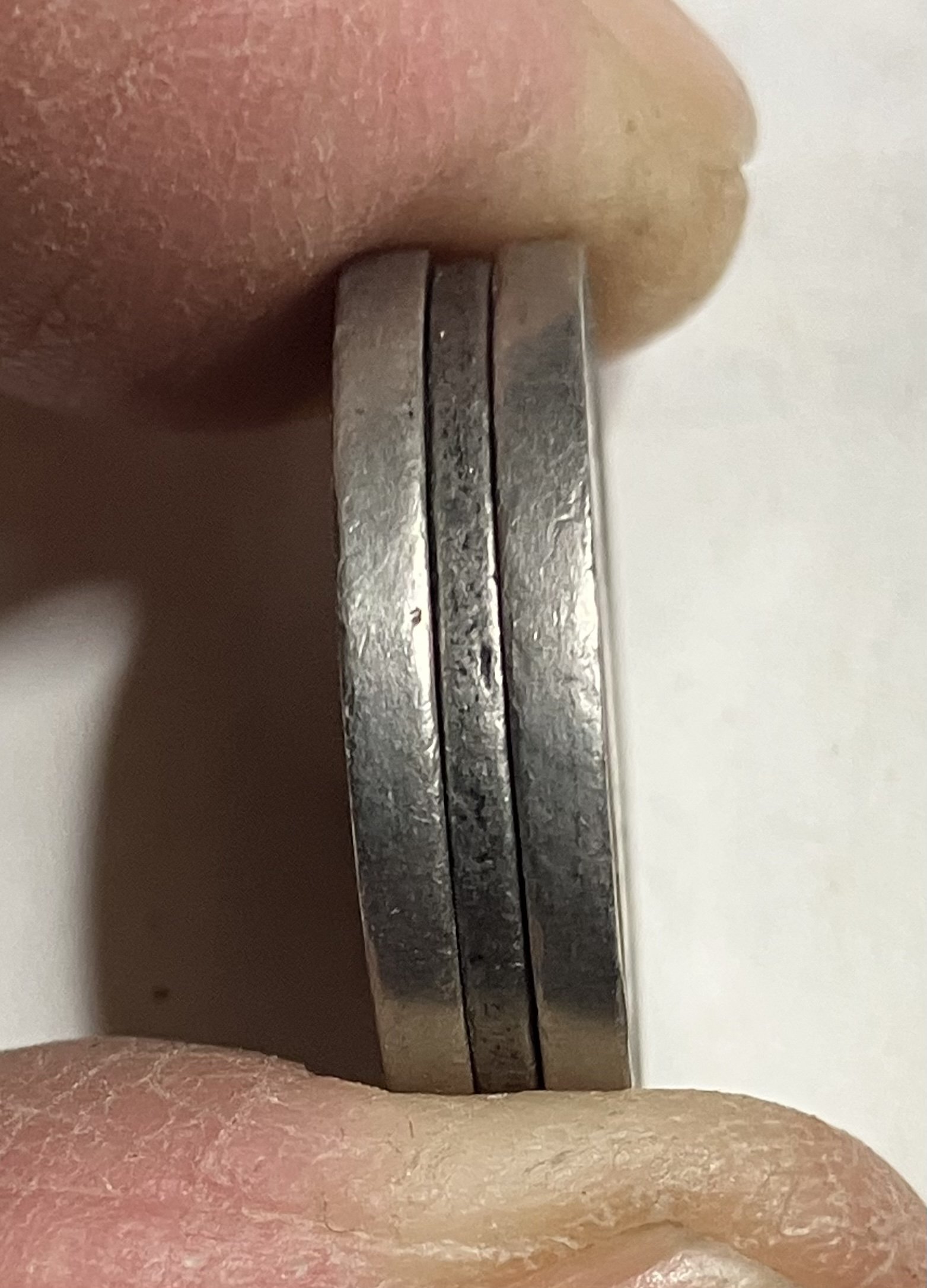
Which brings us to our 4.012-gram enigma—a full 20% underweight! Some forum members cried “counterfeit!” pointing to notorious forger Francis Henning. But the evidence tells a different tale…
The Henning Red Herring
Henning’s 1950s fakes targeted 1944 nickels specifically. His crude alloy mixes actually produced overweight coins averaging 5.4 grams. As seasoned collector @BuffaloDieBreak observed:
“Henning’s fakes have heft. This featherweight? Different animal entirely.”
Identifying Key Markers: Acid’s Brutal Legacy
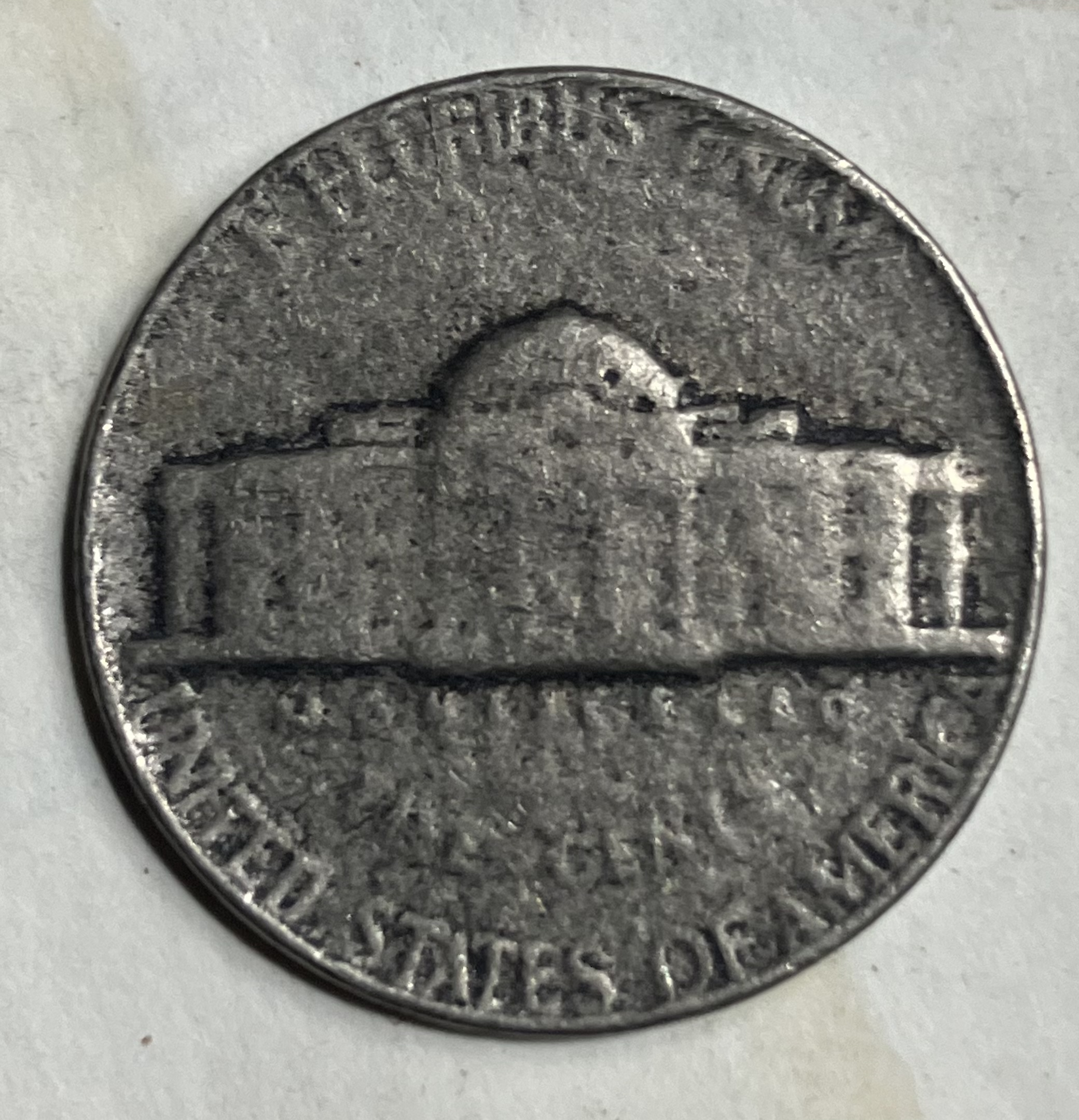
The visual evidence screams chemical trauma. Those blurred Jefferson cheekbones? The ghostly Monticello columns? Classic acid erosion. Nitric acid baths, whether from well-meaning cleaning or environmental exposure, ravage nickel-copper alloys like a time-lapse rot.
Acid Damage Fingerprints
- Weight Loss: 0.99g mass gone—equivalent to 500 post-1959 pennies!
- Surface Pitting: Like lunar craters under magnification
- Detail Decay: Jefferson’s profile looks drunk at a 45° tilt
- Patina Assassination: Original mint luster replaced by dull, chalky residue
The gallows humor writes itself:
“Looks like this nickel snorted more than Woodstock’s mud.”
Yet beneath the laughs lies tragedy—a coin stripped of numismatic value by chemical overzealousness.
Political Context: Minting Trust in Troubled Times
1939 marked a turning point in U.S. currency integrity. With Depression-era counterfeiters running rampant, Mint Director Nellie Tayloe Ross championed sharper strikes and tighter quality controls. A pristine ’39 nickel represents this victory—its full steps Monticello a badge of honor against fraud. Our acid-scarred specimen? A cautionary tale of good intentions gone horribly wrong.
Collectibility & Value: Preservation is King
For unmolested 1939 nickels, grading is destiny:
- Circulated (VG-F): $1-$5—perfect for type collectors
- Mint State (MS-63): $15-$30—eye appeal matters!
- Full Steps (MS-65+): $500+—patina and strike quality command premiums
Our chemically abused 4.012g example? As forum user @CoinERDoc bluntly stated:
“Face value curiosity. Never clean coins—period.”
Without provenance linking it to famous forgers, it’s a relic best studied, not shopped.
Conclusion: Handle History With Care
This diminished nickel embodies numismatics’ golden rule: preservation beats intervention. While its 4.012g frame tells stories of metal shortages and wartime tension, the acid damage reminds us how easily history dissolves. Next time you hold a Jefferson nickel, imagine Roosevelt’s fireside chats and tank factories—then ask yourself: will my hands help this artifact endure? As true collectors know, sometimes the greatest act of stewardship is leaving well enough alone.
Study the evidence yourself (click to enlarge):

Related Resources
You might also find these related articles helpful:
- What is the Real Value of a 1939 Jefferson Nickel Weighing 4.012 Grams in Today’s Market? – Ever stumbled upon a coin that defies the books? That’s precisely what happened when collectors unearthed a puzzli…
- 1936 Commemoratives: America’s Coinage Excess in the Shadow of Economic Despair – Relics That Captured a Nation’s Struggle Hold a 1936 commemorative half-dollar and you’re gripping history i…
- The 1939 Nickel Weight Mystery: Acid Damage, Counterfeit Clues & Bullion Value Insights – When Metal Whispers Secrets: The True Measure of a Coin’s Soul We’ve all held that tantalizing coin wonderin…
