The 1797 16 Star Dime Authentication Guide: Spotting Counterfeits in a Sea of Reproductions
January 14, 2026Preserving History: Expert Conservation Strategies for Your 1797 16 Star Dime
January 14, 2026
Introduction: Reading a Coin Like a Time Capsule
Condition isn’t just important—it’s the entire conversation. When assessing early American treasures like the 1797 16 Star Dime, grading becomes detective work where every scratch and shadow tells a story. As a specialist in early federal coinage, I’ve handled enough of these historical survivors to know that spotting the difference between a $10 pocket piece and a $1,000 numismatic treasure requires equal parts knowledge and instinct.
Historical Significance: Minting Growing Pains in Silver
The 1797 Draped Bust Dime captures America’s adolescence in 89% silver. Born during Tennessee’s statehood celebrations, this coin reflects Chief Engraver Robert Scot’s quixotic attempt to add stars for each new state—a beautiful concept doomed by cramped real estate. What makes this piece numismatic gold? Its very imperfections chronicle our young nation’s struggles.
When Stars Collide: A Design Crisis
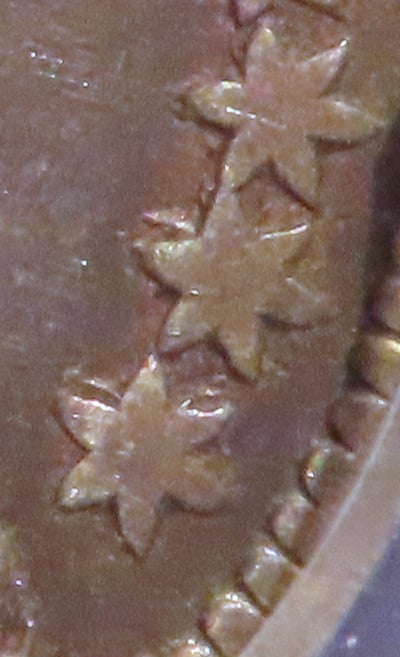
Hold an example to the light and you’ll witness Scot’s desperation firsthand. The obverse shows tiny compass-like guide marks between stars—a stopgap solution visible in this extreme close-up. These desperate hash marks testify to the Mint’s realization: we’d need a coin the size of a dinner plate to fit all future states. After just one year, they scrapped the experiment, cementing the 16-star variety as a collector’s holy grail.
The Dying Scream of an Overworked Die
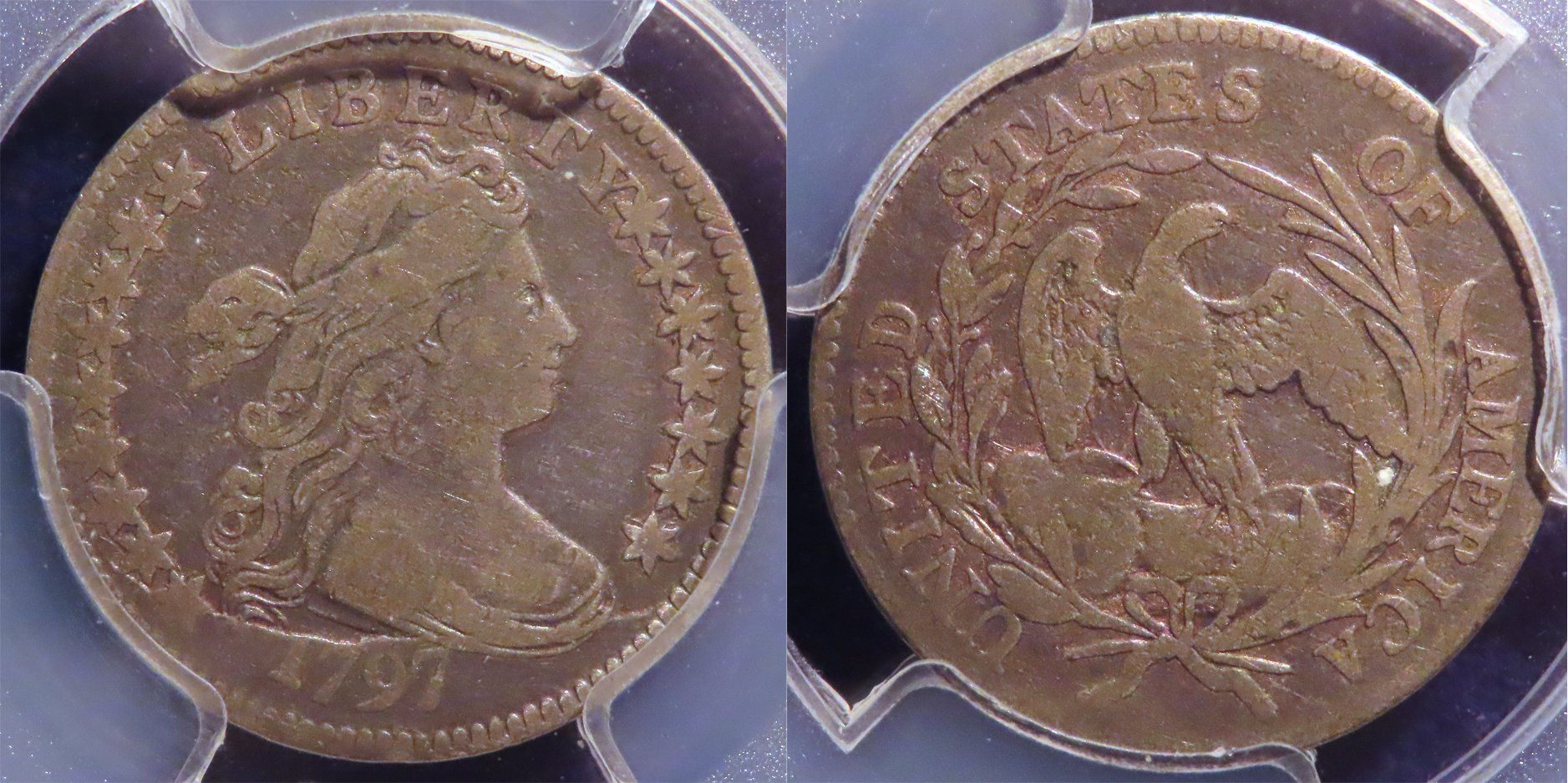
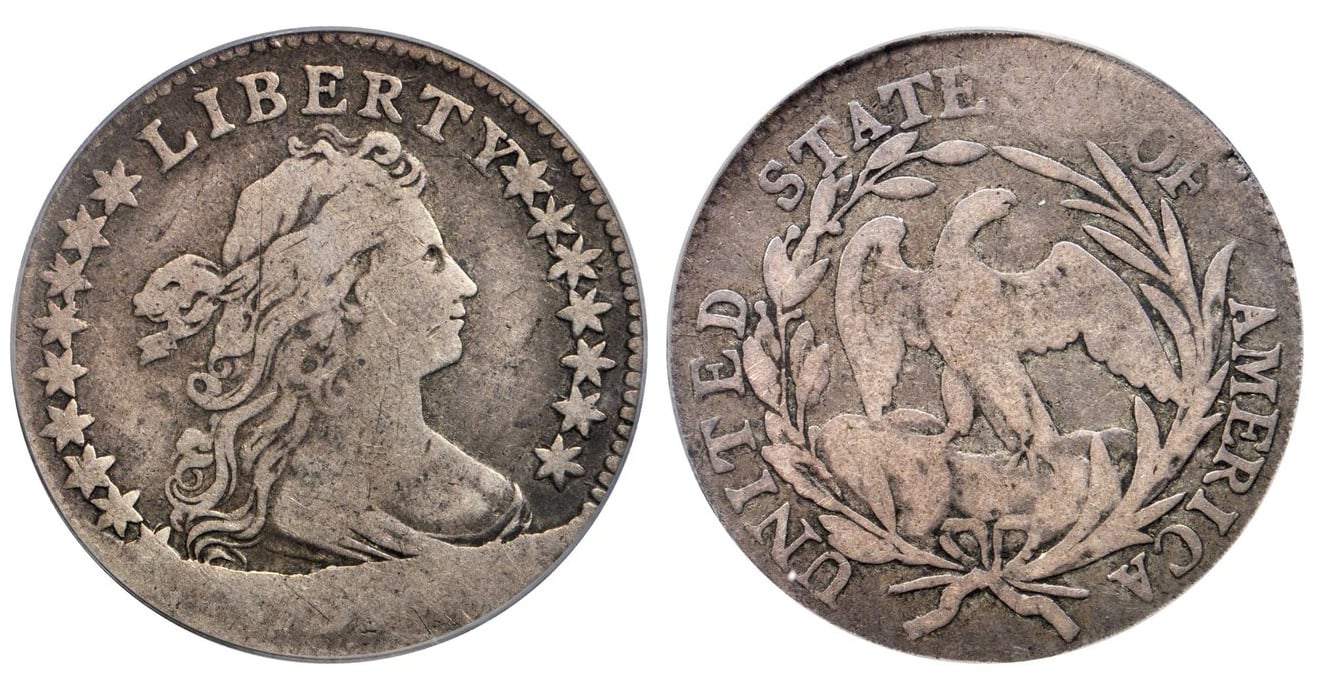
Every known specimen bears the dramatic die crack above the date—a “badge of honor” shown in this image. Wartime steel shortages forced the Mint to use inferior dies that fractured like peanut brittle. Rather than waste precious metal, they kept striking coins as the die literally fell apart. The terminal state (seen in this dramatic example) shows numbers fading like ghosts, creating subtypes that make advanced collectors weak in the knees.
The Collector’s Magnifying Glass: Grading Nuances
1. Wear Patterns – The Map of a Coin’s Journey
At PCGS VF-25, we’re looking for specific historical footprints:
- Obverse Telltales: Liberty’s hair above her brow starts showing friction, while the delicate curls behind her neck begin blending into the field
- Reverse Secrets: The eagle’s breast feathers lose definition first—count how many remain separated to gauge grade
The specimen we’re examining shows classic VF character: about 75% hair detail remains, with those signature curls above Liberty’s ear softening like a charcoal sketch. On the reverse, half the breast feathers whisper their presence—the golden benchmark for this grade.
2. Surface Poetry – Originality Above All
Nothing sings like untouched surfaces. This dime retains whispers of original satin luster in the protected star fields—that elusive glow collectors would trade their firstborn for. The even gray-blue patina (with just a few period-appropriate carbon flecks near star 14) suggests careful stewardship since the Washington administration.
3. Strike Characteristics – Beauty in Weakness
Early U.S. Mint technology couldn’t handle Scot’s intricate designs. Consistently weak strikes create diagnostic soft areas:
- Liberty’s hair ribbons often appear flattened as if by summer humidity
- The eagle’s right wing feathers melt into mushy abstraction
Our example displays the haunting “ghost date” effect—where 1797’s final digits hover like faint specters due to die collapse above the terminal crack. This isn’t a flaw—it’s a time-stamp!
4. Eye Appeal – The X-Factor
Grading services measure wear, but collectors measure magic. This dime transcends its technical grade with:
- Dramatic 85/15 southward centering that gives Liberty stage presence
- Fields mercifully free of distracting “storytelling” scratches
- Toning that cascades from gunmetal to dove gray in the recesses
As one forum sage perfectly observed:
“Great look and nice explanation of the die and the manufacture!!”
Grading Standards Decoded
The VF-25 Sweet Spot
PCGS defines VF-25 as “moderate wear without obliterating personality.” For this series, we’re forensic examiners of:
- The survival rate of Liberty’s intricate cap details
- Whether her gown’s drapery still flows rather than flatlines
- That critical feather separation on the eagle’s wings
Our featured coin earns its stripes through remarkably crisp stars (guide marks notwithstanding) and razor-sharp “UNITED STATES” lettering. The reverse’s olive leaves—typically the first detail to vanish—remain impressively articulated.
The Originality Imperative
NGC graders would kiss this coin’s surfaces—if they weren’t professionals. The complete absence of cleaning marks makes numismatists weep with joy. Those faint hairlines visible under magnification? Just the gentle caress of 225 years of honest commerce.
Scarcity Meets Demand: The Value Equation
With perhaps 200 survivors across all grades, the 1797 16 Star Dime sits firmly in “semi-key” territory. Current market realities:
PCGS VF-25 Valuation Landscape
- Entry Point: $3,500 (decent but forgettable examples)
- Showstopper Premium: $5,000+ (breathtaking eye appeal/original skin)
- Recent Reality Check: $4,600 (Heritage 1/2023, VF-25 CAC sticker)
As noted in forum discussions, these coins play hard to get—only 17 PCGS-graded pieces have crossed auction blocks since 2018. The dramatic terminal die state (see this heart-stopper) commands 15-20% premiums from specialists chasing die varieties.
Condition Rarity Hierarchy
While nine Mint State examples exist in census reports, most survivors resemble Civil War veterans—battered but proud. That makes problem-free VF specimens like this FUN Show acquisition collection cornerstones. To quote one sharp-eyed collector:
“The coin does not appear very frequently, even in the major auctions.”
Conclusion: Holding History in Your Palm
The 1797 16 Star Dime distills early American numismatics into a silver canvas smaller than your thumbnail. Its cracked dies reflect a nation improvising through scarcity. Its star-crowded obverse whispers of westward expansion. Its survivor population—smaller than a rural high school graduating class—testifies to collectors’ devotion. Like forum participants, I’ll leave you with this truth:
“Fascinating coin and thanks for the info regarding its manufacture.”
Whether you’re contemplating a $3,500 VF or a $50,000 Mint State marvel, remember—grading measures wear, but passion measures value.
Related Resources
You might also find these related articles helpful:
- The 1797 16 Star Dime Authentication Guide: Spotting Counterfeits in a Sea of Reproductions – Counterfeit Alert: Mastering the 1797 16 Star Dime’s Telltale Signs Hold your early American treasures up to the l…
- How to Spot Rare Errors on a 1797 16 Star Dime: A Collector’s Guide to Die Cracks and Hidden Treasures – Ever feel that thrill when you spot a tiny imperfection that transforms an ordinary coin into a numismatic legend? For e…
- Stars, Steel, and Statehood: The Captivating History of the 1797 16-Star Dime – The Birth of a Numismatic Treasure Every coin whispers secrets of the past – if you know how to listen. The 1797 1…