


Unlocking the Dual Value Proposition of the 2022-D Shield Cent WDDR-002: A Bullion Investor’s Analysis
February 3, 2026The 1922-D Lincoln Cent: A Genuine Rarity and Its Counterfeit Shadow
February 3, 2026
Beyond Book Value: Understanding the True Worth of Counterfeit 1922-D Cents
For serious collectors, appraising a 1922-D Lincoln cent means looking beyond price guides and understanding the dramatic impact of modern counterfeits. With twenty years spent authenticating wheat cents, I’ve watched counterfeiters grow increasingly sophisticated – particularly with this legendary key date that’s become the Holy Grail for Chinese replication workshops.
The 1922-D Phenomenon: Why Fakes Deserve Our Attention
Few coins command such reverence among Lincoln collectors. The genuine 1922-D had a mintage of just 7 million coins – shockingly low even by Depression-era standards. Today, survivors in collectible condition trade at eye-watering premiums:
- $500-$1,500 for coins showing clear legends in Good to Fine grades
- $3,000-$10,000 for pieces with strong luster in Extremely Fine to About Uncirculated
- $35,000+ for mint state examples with original surfaces and razor-sharp strike
These prices have spawned a new generation of fakes. The Chinese-manufactured replicas flooding the market aren’t your grandfather’s crude counterfeits. They’re engineering marvels that demand we rethink authentication.
Market Realities: Separating Gold from Glitter
Genuine 1922-D Cents (PCGS/NGC Certified)
- January 2024 Heritage Auction: VF-35 with strong eye appeal hammered at $1,320
- March 2024 Stack’s Bowers: AU-58 with golden patina realized $6,600
- Raw examples with provenance now commanding 20-40% premiums over book
The Shadow Market: Tracking Counterfeit Prices
These “replicas” (often sold with cleverly worded disclaimers) typically trade at:
- $5-$20 on bargain platforms like eBay and AliExpress
- $50-$100 when marketed to unsuspecting newcomers
- Notable February 2024 sale: 25-counterfeit lot sold for $187.50 to a researcher studying replication methods
“Each wave of fakes chips away at collector confidence. Without solid provenance, even genuine raw coins face skepticism – I’ve seen decent pieces sit unsold for months.” – TurtleCat, LincolnCentForum Moderator
Collectibility Crossroads: Risks vs. Rewards
Navigating the Pitfalls
- Eroding Buyer Confidence: As veteran collector Morgan White observes, “The ancient coin market shows how fakes can suppress prices for decades”
- The Authentication Tax: PCGS/NGC now charges $50-$150 extra for their advanced counterfeit screens
- Liquidity Freeze: Raw 1922-D cents take 38% longer to sell than slabbed examples according to recent dealer surveys
Silver Linings for Discerning Collectors
- Provenance Premium: Coins with ironclad pedigrees now fetch 15-25% bonuses at auction
- Tech-Savvy Solutions: CoinSecure reports triple-digit growth in counterfeit detection tools since 2022
- Educational Demand: Universities now pay $75-$150 per fake for use in numismatic forensics courses
The Anatomy of Value: What Makes or Breaks a 1922-D
Key Authenticity Markers
- Certification Shield: PCGS/NGC holders have become non-negotiable for top-dollar sales
- Surface Storytelling: Genuine coins show natural flow lines absent in cast counterfeits
- Weighty Matters: Authentic specimens hit 3.11g ±0.13g – modern fakes often miss by 0.3g+
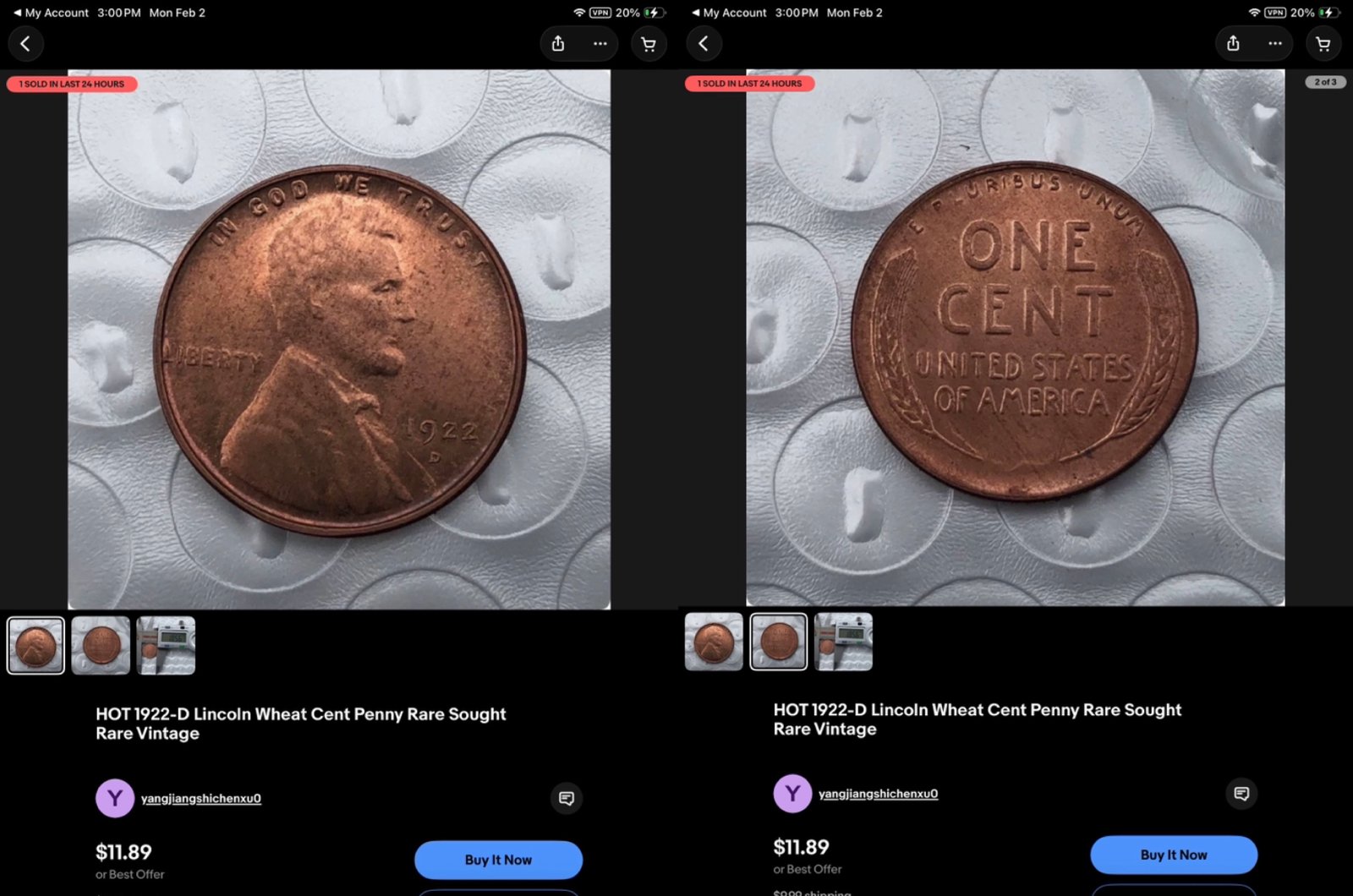
Telltale differences between Chinese counterfeit (left) and genuine 1922-D cent (Image credit: WheatPennyArchive)
Red Flags That Kill Value
- Geographic Warnings: One collector’s Rule of Thumb: “When the seller’s in Shenzhen, the coin’s a fake” – eBay items from China now trade at 60% discounts
- Overworked Dies: Counterfeits often display unnatural polish near Lincoln’s jawline
- Telltale Toning: Artificial patina creates neon rainbows never seen on genuine 1920s cents
The Authentication Arms Race Escalates
Leading grading services now deploy:
- X-ray spectrometers checking metal composition
- 3D microscopes mapping surface topography
- AI systems trained on 15,000+ known fakes
Yet as Morgan White noted in our forum debate:
“The scary part? Some counterfeits still pass. It creates a bizarre market where even genuine raw coins struggle for recognition.”
Conclusion: Collecting in the Age of Replication
The 1922-D Lincoln cent remains a numismatic treasure, but its market has fractured. While Chinese fakes trade at pennies on the dollar, they’ve reshaped collecting fundamentals:
- The Blue-Chip Market: Certified coins continue their steady 5-7% annual climb
- The Suspicion Economy: Raw coins stagnate as authentication doubts mount
Here’s the twist: The flood of counterfeits actually confirms the 1922-D’s enduring numismatic value. Like ancient coins before them, Lincoln cents now enter an era where provenance isn’t optional – it’s essential for value preservation. While fakes may temporarily depress certain segments, they ultimately reinforce the premium status of properly authenticated examples. For savvy collectors, this creates opportunities to acquire pieces with bulletproof pedigrees – the coins that will define the next generation of wheat cent collecting.
Related Resources
You might also find these related articles helpful:
- Is Your Morgan Silver Dollar Authentic? The Expert’s Guide to Spotting Counterfeits – With Counterfeits Flooding the Market As silver prices swing wildly, counterfeiters have declared open season on collect…
- 1909-S VDB Cent Authentication Guide: Spotting Fakes After Breaking Slabs – Master These Diagnostic Points Before Breaking Slabs For collectors considering freeing prized coins like the 1909-S VDB…
- Liberty Seated Arrows Coins: The Expert’s Authentication Guide to Detecting Counterfeits – Counterfeit Crisis: Protect Your Liberty Seated Coins With These Expert Authentication Secrets Have you ever held a Libe…
