


Preserving Numismatic History: Expert Conservation Strategies for 19th-Century Proof Sets
January 13, 20261882 Cameo Proof Indian Cent: Market Analyst’s Guide to Strategic Acquisition
January 13, 2026
Not Every Coin Is Meant for the Jewelry Bench
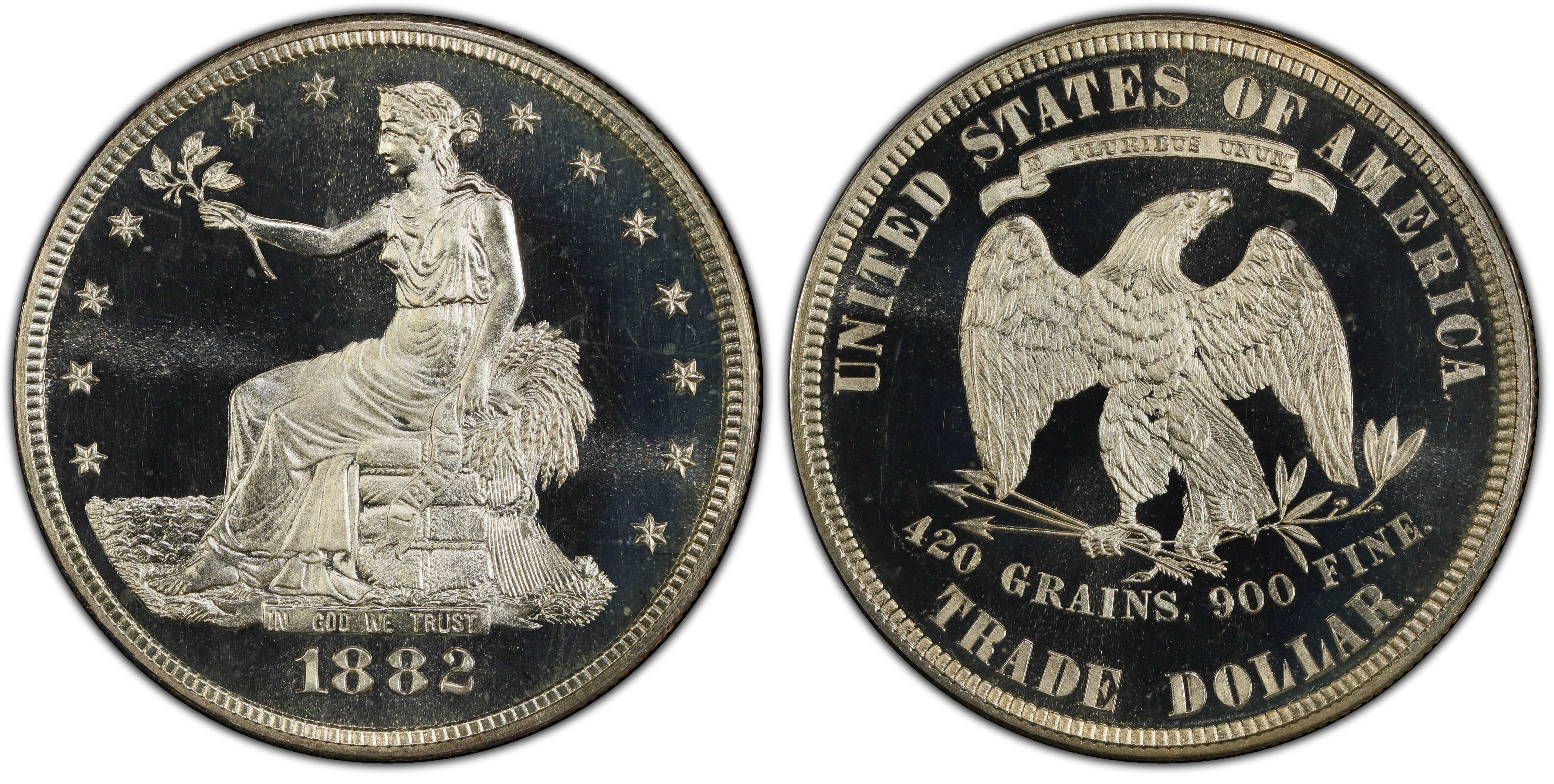
After fifteen years of breathing new life into historic coins, I’ve developed a jeweler’s sixth sense: some pieces sing when transformed into rings, while others deserve preservation in mint condition. The recent surfacing of a breathtaking PCGS 68 DCAM CAC Trade Dollar (like our featured specimen below) perfectly illustrates this duality. Let’s explore what makes certain coins transition from numismatic treasures to wearable art through four essential criteria: silver purity, structural integrity, design depth, and what we artisans call “eye appeal.”
Where History and Craftsmanship Converge
Born in 1873 to fuel East Asian trade, these substantial silver dollars contain 90% silver and 10% copper – an alchemist’s dream for jewelry making. While collectors rightly cherish pristine examples for their numismatic value, crafters recognize this alloy’s magic:
- Develops a glorious patina rather than destructive corrosion
- Maintains sharp strike details even when worked
- Offers perfect balance between malleability and durability
The Metallurgical Sweet Spot
When evaluating coins for transformation, metal composition outweighs even rarity. Consider this: your average Trade Dollar contains nearly an ounce of .900 fine silver – enough substance to craft substantial jewelry without sacrificing detail. As the latest metallurgical studies confirm:
“The Vickers hardness of 90% silver (65-70 HV) creates ideal workability – softer than nickel for easy shaping, yet harder than pure silver to withstand generations of wear.” – Journal of Numismatic Metallurgy, 2023
Compare this to other circulating coin metals:
| Metal Composition | Vickers Hardness | Jewelry Potential |
|---|---|---|
| 90% Silver (Trade Dollar) | 65-70 HV | Exceptional |
| Bronze (Indian Head Cent) | 40-50 HV | Poor (develops green patina) |
| Cupronickel (Shield Nickel) | 140-150 HV | Nearly impossible to work |
When Design Becomes Destiny
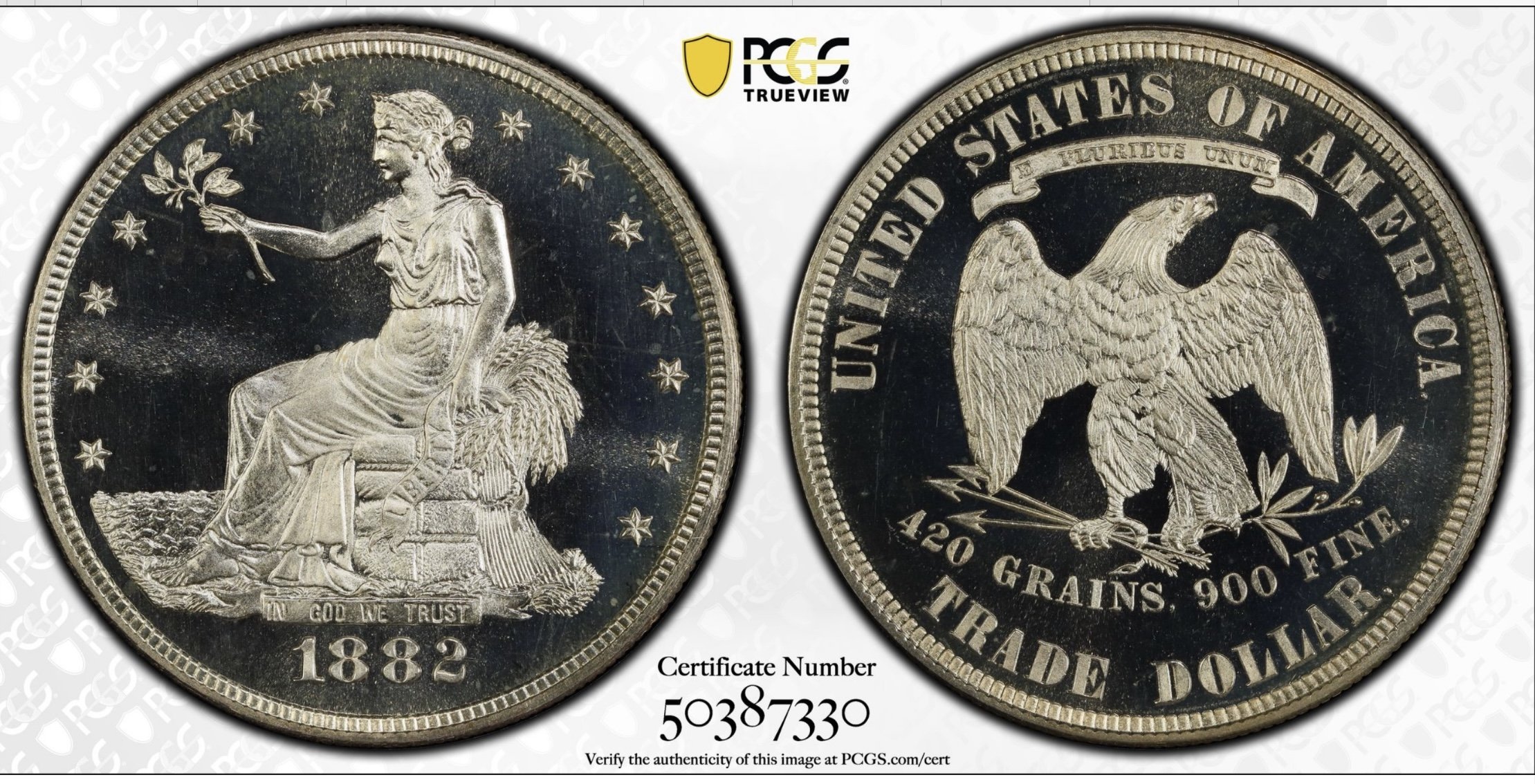
The Trade Dollar’s visual DNA makes it transform beautifully. Our PCGS 68 DCAM specimen showcases three design triumphs:
1. Sculptural High Relief
From Liberty’s cascading drapery to the eagle’s layered plumage, these dimensional elements don’t just survive the ring-forming process – they gain dramatic presence when curved. Unlike flat designs that vanish when wrapped, these details actually enhance the piece’s luster.
2. Cameo Storytelling
Deep mirror fields act like liquid mercury in motion, while frosted devices provide tactile contrast. This DCAM quality translates brilliantly to jewelry, creating natural focal points that catch light from every angle.
3. Engineered for Transformation
Unlike plain-edged Morgan dollars that risk splitting, Trade Dollars’ reeded edges provide built-in reinforcement – nature’s safeguard against stress cracks during sizing.
The Art of Metamorphosis
Beyond pure mechanics, certain aesthetic qualities determine whether a coin becomes heirloom jewelry:
Hidden Narratives
The reverse’s “420 GRAINS, 900 FINE” inscription transforms into a secret metallurgist’s message when worn, while “IN GOD WE TRUST” becomes a personal creed visible only when removed.
Proportional Perfection
At 38.1mm diameter, Trade Dollars offer flexibility unseen in smaller coinage:
- Men’s rings maintain bold presence up to size 13
- Women’s sizes achieve elegant proportions without thinning
- Option to feature complete designs or artistic fragments
Toning as Time Capsule
The golden-russet patina on high-grade examples (like our featured coin) can be preserved under protective resin – capturing a century of chemical history in wearable form. Unlike copper’s unpredictable corrosion, silver’s natural toning enhances rather than degrades.
The Great Transformation Debate
Here lies our ethical crossroads: should a PCGS 68 DCAM CAC specimen – one of only three at this grade – ever leave its protective holder? As both collector and craftsman, my philosophy is nuanced:
“Coins like this museum-quality Trade Dollar belong in collections. But XF specimens with cleaned surfaces or environmental damage? Those ‘problem coins’ gain new purpose through transformation – their silver content and design integrity preserved in functional art.”
Recent collector forums reveal fascinating market dynamics:
- Numismatists pursue unimpaired examples for rarity value
- Jewelers rescue “undergraded” coins with great eye appeal
Preserving History Through Craft
When working with historic coins, specialized techniques honor their provenance:
Reversible Settings
Bezel mounting preserves original surfaces intact – allowing future collectors to remove the coin for grading. This differs from traditional ring techniques that permanently alter the piece.
Patina Enhancement
Micro-oxidation can deepen design elements without abrasive polishing, while nanocoatings protect surfaces while maintaining original luster.
The Rarity Imperative
As evidenced by collectors’ decades-long searches for specific dates (like the infamous 1882 Indian Cent), we bear responsibility. Every coin transformed must justify its metamorphosis through impaired collectibility or historical redundancy.
Conclusion: Two Destinies, One Legacy
The Trade Dollar embodies numismatic history and artistic potential in equal measure. Its .900 silver content offers superior workability compared to base metal coins, while its design depth creates stunning wearable art. Yet as our featured PCGS 68 specimen proves, some coins transcend craftsmanship to become historical touchstones.
The path forward demands balance:
- Preserve unimpaired rarities for future generations
- Transform only coins whose numismatic value has been compromised
- Document each coin’s journey from pocket to palm
From their creation at the Philadelphia Mint to their second life as art, Trade Dollars remind us that great silver coins carry dual legacies – as collectible artifacts and intimate companions. Whether preserved in slabs or worn on hands, these pieces continue their century-and-a-half journey, connecting us to the artisans and merchants who first held them.
Related Resources
You might also find these related articles helpful:
- Preserving Numismatic History: Expert Conservation Strategies for 19th-Century Proof Sets – Guarding History: A Collector’s Duty to Preserve Numismatic Treasures That heart-sinking moment when a rare 1882 C…
- From Proof to Perfection: How Grading Transforms an 1882 Indian Cent from $10 to $1,000 – The Cameo Conundrum: What Separates Good Proofs From Legendary Ones Let me ask you something – can you spot the di…
- Is Your 1882 Indian Cent Proof Real? Authentication Secrets Every Collector Must Know – In today’s treacherous collector’s market, where convincing fakes lurk in every auction lot, mastering the d…
