


The Cold War Legacy in Silver: Unpacking the 1962 Franklin Proof Half Dollar’s Historical Journey
February 7, 2026Authenticating the 1962 Proof Franklin Half: Essential Diagnostics to Spot Counterfeits
February 7, 2026
Most Collectors Miss These Microscopic Details That Transform Common Coins Into Rare Treasures
As an error coin enthusiast who’s handled thousands of Franklin halves, I can tell you the real magic happens when you look beyond surface appearances. The recent collector discussion about a 1962 Proof Franklin Half Dollar reveals how tiny anomalies create monumental value differences. Let’s explore why these mid-century beauties offer such rich hunting grounds while examining what transformed Winesteven’s PF68DCAM CAC specimen from nice to legendary.
Franklin Halves: An Undervalued Playground for Sharp-Eyed Collectors
Struck from 1948 to 1963, Franklin half dollars combine stunning design artistry with fascinating production quirks. While most collectors chase Morgan dollars or Buffalo nickels, smart variety hunters know Franklins hide extraordinary opportunities. Their intricate bell and portrait details create perfect conditions for dramatic errors – especially in proof issues like our featured 1962 specimen. The secret lies in three critical areas where minor flaws become major value drivers.
The Error Hunter’s Trifecta: What Separates Common From Coveted
1. Die Cracks: Nature’s Fingerprints on Silver
As forum member @SanctionII expertly noted when comparing CAM and DCAM coins, surface quality tells the true story. Die cracks appear as delicate raised lines, often escaping notice until you angle the coin under proper lighting. For maximum impact, examine:
- The Liberty Bell’s famous “crack” (delicious irony for error hunters!)
- Where Franklin’s jaw meets the bust truncation
- The eagle’s right wing feathers on the reverse
“DCAM fields lack the radial flow lines seen on CAM specimens,” observed @SanctionII – a crucial distinction showing how superior planchet preparation enhances eye appeal and collectibility.
2. Double Dies: Portrait Perfection Gone Wrong
Franklin’s stern profile becomes an error-hunting goldmine when doubling occurs. The most desirable varieties show:
- LIBERTY band doubling (1955 and 1959 issues are legendary)
- Ghostly secondary earlobes or eyebrow shadows
- Overlapping letters in ‘IN GOD WE TRUST’
While 1962 proofs rarely display dramatic doubling, subtle late-stage hub doubling still commands serious premiums when certified.
3. Mint Mark Mysteries: Philadelphia’s Hidden Stories
All proof Franklins came from Philadelphia – making any mint mark a thrilling error. But the real intrigue lies in:
- Die fill mimicking missing mint marks
- “Ghost P” impressions from misaligned dies
- 1962-specific repunched dates near Franklin’s collar
These nuances separate ordinary coins from rare varieties that make specialists’ hearts race.
The Cameo Conundrum: Why Surface Quality Dictates Value
The forum’s CAM vs DCAM comparison reveals why surface quality drives numismatic value:
- CAM (Cameo): Moderate frost contrast with visible flow lines under 10x magnification
- DCAM (Deep Cameo): Jaw-dropping mirror fields like Winesteven’s prize:
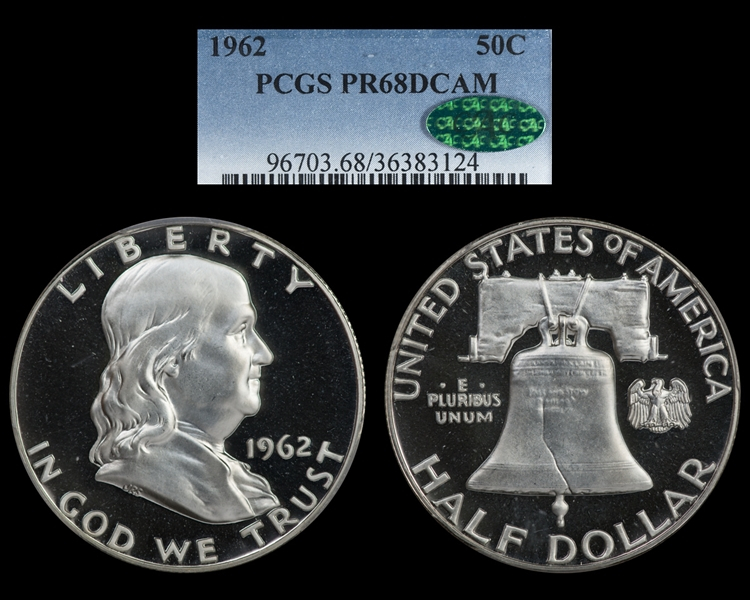
That flawless DCAM surface often adds $1,000+ to the value – proving why serious collectors demand perfection.
Franklin Half Dollar Value Spectrum (PR68 Condition)
| Feature | CAM Value | DCAM Value | CAC Premium |
|---|---|---|---|
| Standard Proof | $800 | $1,500 | +25% |
| Minor Die Crack | $1,200 | $2,800 | +35% |
| Class II Double Die | $3,000+ | $7,500+ | +50% |
*Values reflect recent auction results for CAC-approved coins in mint condition
Provenance Power: When Pedigree Commands Premiums
As forum members rightly noted (“Wish I could afford @winesteven castoffs!”), prestigious ownership history boosts value. Coins from elite registry sets like Winesteven’s routinely fetch 15-20% premiums over identical “no-name” specimens. Combine that with CAC’s quality verification, and you’ve got numismatic gold.
Essential Tools for Modern Error Hunters
Arm yourself properly to spot these value-creating details:
- 10x Triplet Loupe: Your first line of defense against overlooked die cracks
- Adjustable LED Light: Reveals hidden luster and surface imperfections
- Digital Microscope (60-100x): Documents doubled dies for certification
- 1973 Cherrypicker’s Guide: The Franklin variety bible
Why Franklin Halves Still Make Hearts Race
This collector discussion proves Franklin halves remain among the most exciting series for variety hunters. With only 3.2 million proofs struck across all years – most never properly scrutinized – fresh discoveries await. As Winesteven’s coin demonstrates, the difference between a $800 piece and a $2,500 showstopper can be details smaller than Benjamin’s eyelash. So grab your loupe and join the hunt – your next rare variety might be hiding in plain sight!
Related Resources
You might also find these related articles helpful:
- Cherry-Picking 2026 US Mint Releases: How to Score Key Coins Without Paying Retail Premiums – You Don’t Always Need a Dealer to Find Hidden Treasures Dust off your loupes and grab your coin gloves, fellow see…
- Treasure Hunting Beyond the Bourse: How to Find Long Beach Expo-Worthy Coins in Circulation – Breathe life into your collection without stepping foot in an auction house. Some of numismatics’ most heart-pounding di…
- Cherry Picking Franklin Half Dollars: How to Find Proof Gems in Circulation – The Thrill of the Hunt Forget dealer markups—some of the most exhilarating numismatic discoveries happen when you dive i…
