


Is Your 1849/6 Half Dime Authentic? Expert Guide to Spotting Counterfeits & Overdate Errors
January 3, 2026Preserving Rarity: Expert Conservation Guide for the 1849/6 Overdate Half Dime
January 3, 2026
The Ultimate Guide to Grading the Legendary 1849/6 Seated Half Dime
In numismatics, condition isn’t just important – it’s the heartbeat of a coin’s soul. When Heritage Auctions shattered records with their $35,000 sale of the finest known 1849/6 Seated Liberty Half Dime, they didn’t just auction silver. They showcased a time capsule preserved with near-miraculous care, demonstrating how mint-state perfection transforms rare varieties into museum-worthy treasures. Let’s explore what separates such legendary pieces from ordinary circulated coins.
Historical Significance of the 1849/6 Overdate
Cradled in your palm, this 90% silver marvel whispers secrets of the Philadelphia Mint’s bustling 19th-century workshop. The 1849/6 overdate emerged when harried mint workers repurposed an 1846-dated working die, punching a bold “9” over the fading “6” with unmistakable urgency. As veteran collector @yosclimber observes, this creative thriftiness birthed two distinct prize-worthy varieties:
- V-4 (9/Near 6): The Heritage superstar showing the ghostly curve of its predecessor digit
- V-2 (9/Far 6): Earlier die states revealing more pronounced underdigit remnants like numismatic fingerprints
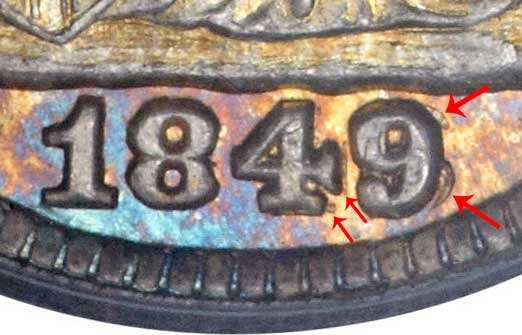
“Don’t trust faded Red Book listings claiming ‘9/8’ varieties – that lingering curve beneath the 9 tells the true story” – @yosclimber
Identifying Key Grading Markers
Wear Patterns: The $34,990 Difference
To comprehend the Heritage specimen’s PCGS MS-68 glory, imagine a coin frozen in 1849. Zero wear means:
- Liberty’s Knee: Granular detail so crisp you could count every minting press impression
- Breast & Cap: Drapery stripes standing at attention like soldiers on parade
- Reverse Shield: Horizontal lines untouched by 173 years of potential harm
The Simpson Collection specimen (PCGS Certification) showcases surfaces where original mint luster still dances across these critical zones like sunlight on fresh snow.
Luster: The MS-68 Secret Weapon
True mint-state magic reveals itself in three dimensions of light:
- A mesmerizing cartwheel effect that follows your gaze across both faces
- Delicate “mint bloom” texture sheltering near stars like untouched morning frost
- Not a single cleaning hairline to disrupt the surface’s liquid silver flow
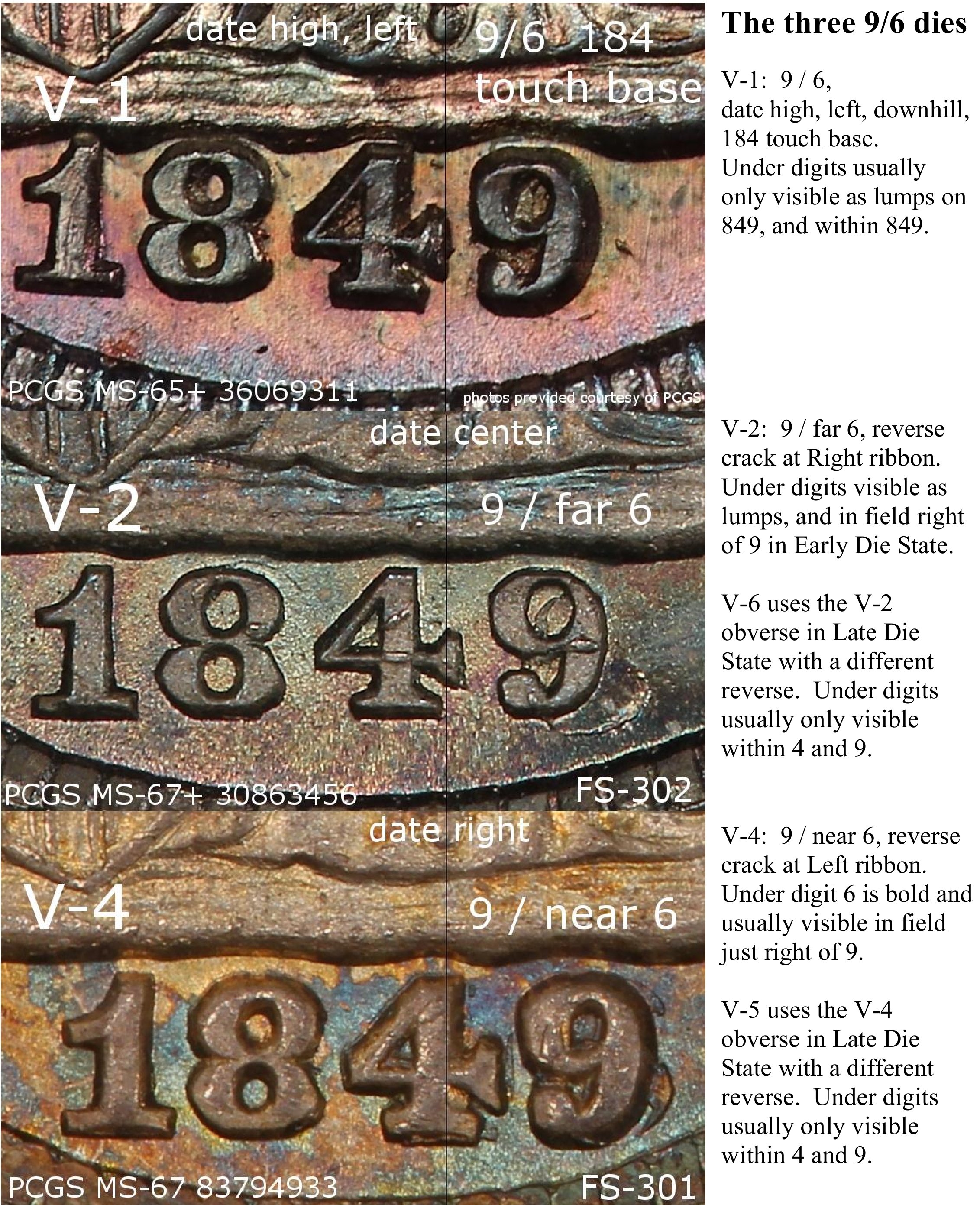
The Heritage coin doesn’t just have luster – it possesses satiny radiance kissed by golden-apricot toning that enhances rather than obscures its story. This isn’t toning; it’s time’s artwork.
Strike Quality: Separating Mint State Grades
At MS-68 levels, every detail must sing with crystalline clarity:
- Wreath berries plump enough to harvest
- Drapery lines at Liberty’s elbow standing in perfect regimented rows
- Stars blazing with sharp-centered authority
- Denticles standing guard like unbroken ivory chess pieces
Compare this perfection to the historically significant but softer V-2 EDS specimen (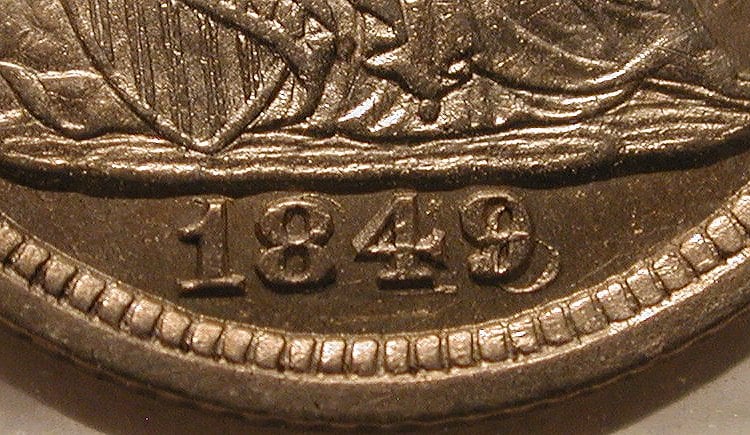 ), where time has gently kissed the highest points.
Eye Appeal: The Collector’s Heartbeat
PCGS graders seek that intangible “wow” factor through:
- Toning that evolved naturally like fine wine, not applied like makeup
- Visual harmony balancing design elements like a master painting
- Surfaces so clean they disappear under magnification
- Strike quality and luster performing in numismatic symphony
The Heritage coin’s vibrant surfaces and flawless complexion create what experts call “superb eye appeal” – a quality that can ignite bidding wars and elevate auction prices by 20% or more.
The Value Guide: Why $35,000?
This coin’s stratospheric price combines four numismatic superpowers:
- Condition Census Royalty: Reigning monarch across all 1849 varieties
- Plate Coin Immortality: Featured in attribution bibles as the V-4 reference standard
- Provenance Poetry: Simpson Collection pedigree singing of careful stewardship
- Diagnostic Clarity: Overdate remnants visible to the naked eye – no loupe required
Witness the collectibility spectrum:
| Grade | Value Range | Key Differentiators |
|---|---|---|
| G-4 | $150-$300 | Date readable through wear’s veil |
| VF-20 | $600-$900 | Drapery details emerging like buried treasure |
| MS-63 | $8,000-$12,000 | Luster peeking through light bag mark constellations |
| MS-68 | $30,000-$40,000+ | Perfection surviving 17 decades untouched |
Authentication Pitfalls: 9/6 vs 9/8 Debate
As forum sages (@CaptHenway, @Steven59) warn, even seasoned collectors can stumble:
- The 9/8 Mirage: Misreading the 6’s curved base as an 8 remains a costly pitfall
- Die State Detective Work: Early states reveal more underdigit evidence like buried maps
- Gang Punch Evidence:
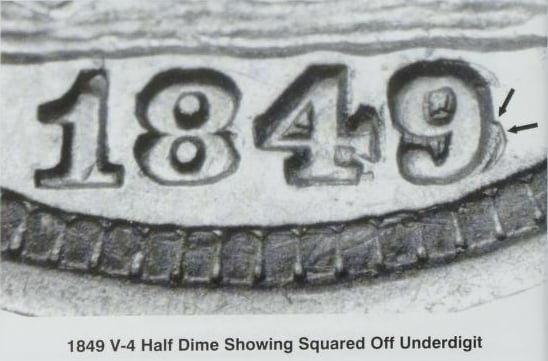 The 1846 logotype’s distinct 4 and 6 shapes form the case-closing signature
Professional attributors examine three smoking guns:
- Spatial relationships between digit ghosts
- Curvature of the underdigit’s footprint
- Marriage consistency with documented die pairs
Conclusion: Numismatic Perfection Realized
This 1849/6 Half Dime embodies why we collect: history made tangible, artistry preserved against all odds. As @yosclimber wisely notes, it’s not merely the highest graded – it’s the platonic ideal of its variety, a textbook illustration given physical form.
The lesson sings clear across generations: mastery of wear patterns, luster language, strike character, and attribution nuances transforms collectors into connoisseurs. These skills elevate finds from curiosities to crown jewels, much like @CaptHenway’s reflection on his former specimen: “I wanted it to have a good home where it would be properly appreciated.” In Heritage’s record-breaker, we witness more than a sale – we see a masterpiece returning to its rightful place in numismatic legend.
“Those distinctive 1846 logotype shapes are the Rosetta Stone for attribution” – Final wisdom from our forum’s detective collective
Related Resources
You might also find these related articles helpful:
- Treasure in Plain Sight: Hunting the Coveted 1849/6 Overdate Half Dime Errors – Most collectors dream of spotting that one glint of silver where others see pocket change. For those who understand diag…
- The 1849/6 Overdate Half Dime: Decoding Market Value for America’s Rarest Seated Coin – What’s the real numismatic value of a coin that makes collectors gasp when it hits the auction block? As a Seated …
- Is Your Letter from Dan Brown Concerning Denver Mint Sales of 1964-D Peace Dollars Real? How to Spot a Fake – In the shadowy corners of American numismatics, few tales spark as much heated debate as the legendary 1964-D Peace Doll…
