


The $10,000 Mint Set Myth: How Modern Holders and Grading Knowledge Protect Your Collection
December 19, 2025Crafting Potential of 1938 Coins: A Jewelry Maker’s Guide to Silver Content and Design
December 19, 2025
The Heartbreaking Reality of Coin Preservation Mistakes
Few things pain me more than seeing historic coins robbed of their beauty by well-intentioned errors. When a collector recently shared their “1938 mint set” online, the community instantly recognized a preservation tragedy in the making. Let me walk you through why this case matters – and how you can safeguard your own pieces for future generations.
Decoding the Historical Record
That forum discussion exposed a critical gap in collector knowledge. As seasoned numismatists pointed out, the U.S. Mint didn’t produce official uncirculated sets until 1947. Authentic 1947-1958 issues arrived in humble manila envelopes with three cardboard sleeves – a far cry from the modern plastic tomb shown in the original post. Spotting this timeline discrepancy is your first defense against misrepresented coins.
Hallmarks of Authenticity
- 1947 Dawn: True mint sets debut with no “Silver” labels needed – every denomination was 90% silver
- Cardboard Sanctity: Original sleeves allowed natural atmospheric exchange
- Provenance Matters: Packaging tells half the story of a coin’s journey
“What you have are 5 coins put in a modern aftermarket plastic holder” – Zack’s razor-sharp forum observation cuts to the heart of the issue
Red Flags in Modern Packaging
The plastic case cradling those coins practically screamed “inauthentic” to trained eyes. Here’s why:
- Material Anachronism: Flexible PVC plastics didn’t exist for coin storage in 1938
- Label Lunacy: Superfluous “Silver” branding (all denominations were silver!)
- Design Time Travel: Clamshell cases remained decades in the future
Battling Silver’s Greatest Enemies
The Toning Tightrope
Natural toning creates mesmerizing rainbows, but uncontrolled sulfur reactions lead to ugly blackening. The forum’s misdated coins showed how poor storage accelerates this process – either enhancing eye appeal or destroying it forever.
PVC’s Poisonous Kiss
That flexible holder? A death sentence. PVC off-gases hydrochloric acid, leaving sticky green residue that etches into surfaces. I’ve watched mint condition coins lose 90% of their numismatic value overnight from this silent killer.
Your Holder Survival Guide
| Holder Type | Safety Level | Expert Verdict |
|---|---|---|
| PVC Plastic | Coin Murderer | Remove coins NOW |
| Original Cardboard | Historical Guardian | Use archival replacements |
| Mylar Flips | Numismatic Hero | Gold standard for protection |
The Cleaning Trap
Repeat after me: “That shiny coin isn’t dirty – it’s historically intact!” Forum members wisely avoided suggesting cleaning because:
- Original luster disappears forever under abrasives
- Microscopic scratches scream “cleaned” to appraisers
- Collectibility plummets to “damaged goods” status
Preservation Protocol Perfection
- Liberate coins from PVC prisons immediately
- Handle only by edges with cotton gloves
- Encase in crystal-clear Mylar flips
- Store with silica gel soldiers battling humidity
- Maintain a steady 65-70°F sanctuary
Time Capsule in Cardboard
The forum’s genuine 1958 set images reveal preservation done right: 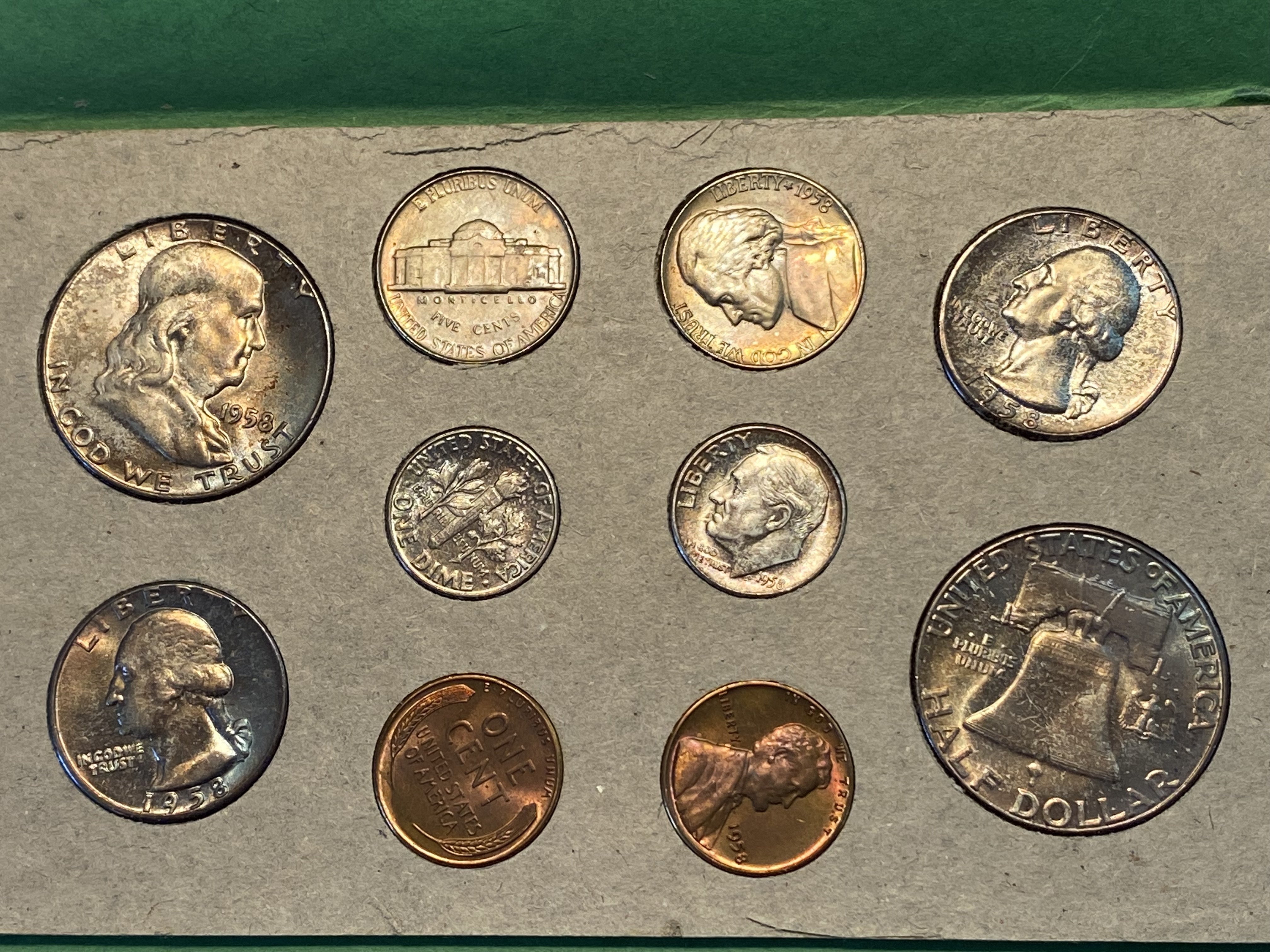
Note how the original cardboard sleeves protect while “breathing.” For modern storage, this solution preserves historical integrity: 
Archival holders maintaining proper spacing – like a museum display case for your collection.
When Preservation Equals Value
A pristine 1958 set in original packaging commands $300-$500, while PVC-damaged coins become numismatic ghosts. The forum’s misrepresented “1938” coins teach us that rare variety claims demand proof – not plastic fantasy cases.
“That’s a modern clamshell case that’s easily opened and you can insert any coins you want.” – An anonymous collector spotting the deception instantly
Guardians of History
Whether you’re holding pre-1947 rarities or genuine mint sets, remember this: every fingerprint left, every PVC case chosen, writes your chapter in a coin’s story. By mastering toning science, banishing harmful plastics, and resisting the cleaning urge, we don’t just preserve silver – we safeguard tangible history. That modern holder claiming to protect? It’s often the wolf at the numismatic door.
Related Resources
You might also find these related articles helpful:
- The 1938 Mint Set Mystery: Spotting Modern Fakes & Hunting Legitimate Errors – How many treasures slip through our fingers simply because we don’t know what to look for? The recent collector fo…
- 1938 U.S. Coin Set Mystery: Unraveling the Truth Behind Fabricated Mint Collections – The Historical Significance of 1938 U.S. Coinage Every coin whispers secrets of its era. As collectors, we’re draw…
- 1938 Mint Set Mystery: Separating Fact from Fiction in Collector Value – As a numismatist who’s handled thousands of U.S. coins, let me tell you – nothing makes my heart skip a beat…
