


Gold CAC Mercury Dimes: When Collector Premiums Outshine Melt Value
January 31, 2026War of 1812 Echoes: The True Story Behind the Controversial 1812 Bust Half Dollar
January 31, 2026
What truly determines a coin’s worth when the guidebooks fall silent? The recent frenzy surrounding an 1812 Capped Bust Half Dollar graded PCGS MS62 – controversially labeled ‘Double Struck’ before vanishing from eBay at $14,000 – reveals how collector passion, grading nuances, and minting mysteries converge to create numismatic value. Let’s examine why this piece ignited such fire in our community.
History in Your Hand: The 1812 Capped Bust Half Dollar
Struck amid the clatter of manual screw presses at the fledgling Philadelphia Mint, the 1812 Capped Bust Half Dollar carries the weight of American numismatic adolescence. John Reich’s Liberty design graces these 50% silver planchets, each one a testament to mint workers battling misaligned dies, temperamental machinery, and inconsistent blanks. While the 1813 issue drowns in machine doubling examples, the 1812’s modest mintage of 1,628,000 pieces makes any mint condition survivor a prize – especially those showing dramatic striking characteristics.
The Great Debate: Machine Doubling or Historic Error?
Reading the Metal Like a Pro
At the heart of this controversy lies a critical distinction every collector should recognize:
- True Double Strike: Multiple die impacts create overlapping, distinctly separated designs across all devices – the holy grail for error specialists
- Machine Doubling (Die Shift): A loose die shifts post-strike, leaving ‘shelved’ doubling that lacks depth, usually isolated to high points
“Study Liberty’s chin and brow on the eBay coin – that flat, stair-stepped doubling screams horizontal die shift. True double strikes don’t play favorites with design elements.”
– Veteran analyst @jacrispies
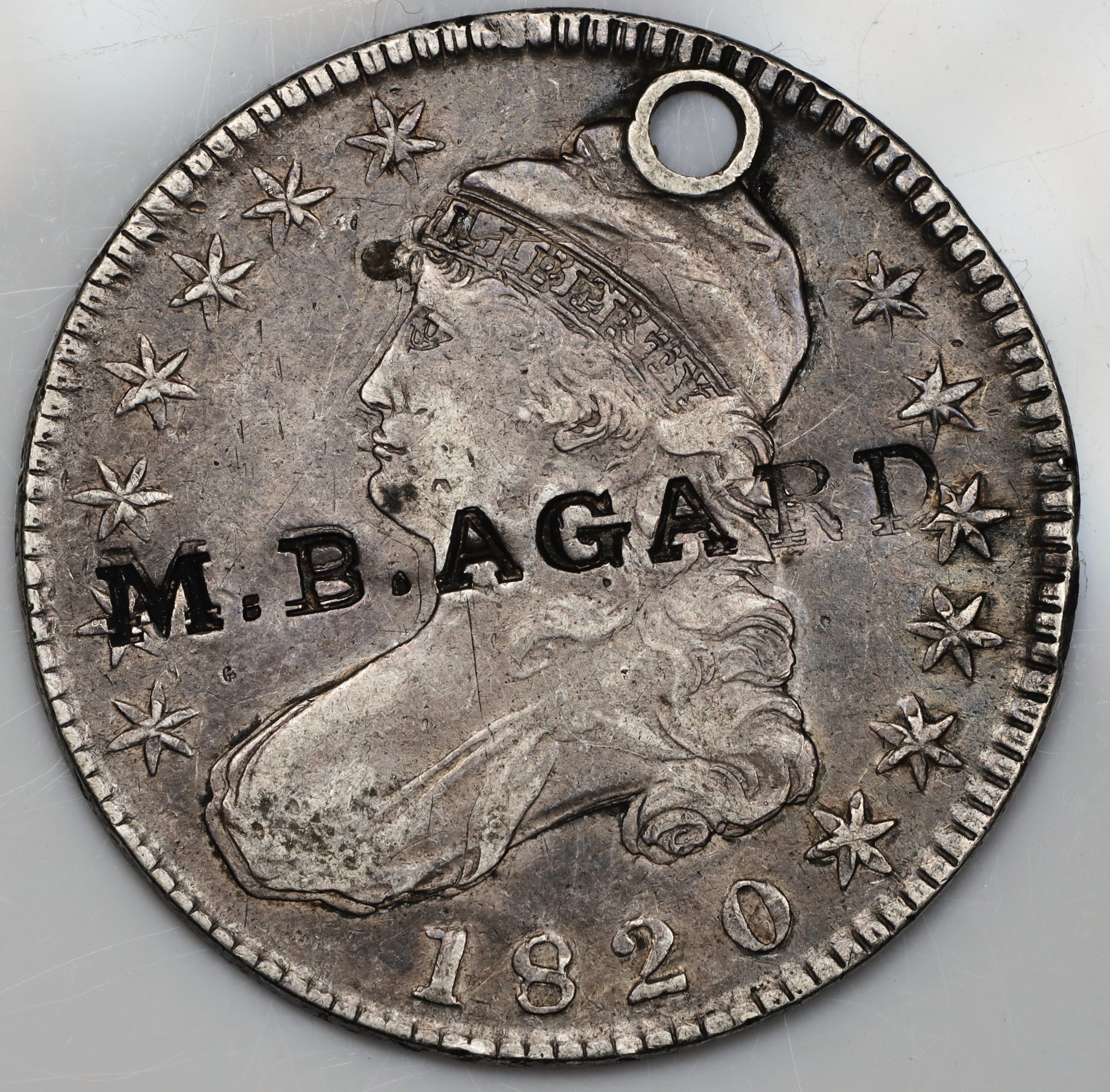
The visual evidence spoke volumes when forum members juxtaposed key diagnostics:

Grading Gambles & Market Ripples
PCGS’s ‘Double Struck’ designation raised eyebrows among specialists familiar with their own 1999 guidelines classifying mechanical doubling as striking artifacts, not errors. This rare variety misattribution created a temporary market anomaly:
- Initial $15,000 ask banking on error rarity premiums
- Collector discernment triggering price retreat
- Lingering questions about holder integrity and warranty implications
Decoding the Dollar Signs: What’s It Really Worth?
Cold Hard Auction Realities
Let’s ground that $14,000 fantasy in recent market data:
- Authentic Double Strikes: 1836 Capped Bust 50C PCGS AU55 fetched $32,900 at Heritage (2023)
- Machine Doubling Stars: Radical 1813 50C PCGS MS64 with shelf doubling sold for $4,700 (2024 Stack’s Bowers)
- Typical 1812 50C: PCGS MS62 examples trade comfortably between $1,200-$1,800
The vanished listing occupied valuation limbo – too rich for a striking curiosity, too cheap for a legitimate rarity. Its disappearance speaks louder than any auction hammer.
The Four Pillars of Collectibility
Beyond the label, four factors dictate this coin’s true appeal:
- Eye Appeal: Dramatic facial doubling creates visual drama despite technical classification
- Provenance Puzzle: The PCGS holder giveth, and potentially taketh away
- Condition Rarity: Such pronounced doubling remains uncommon on 1812 halves
- Market Psychology: Some collectors prize striking quirks regardless of error status
Smart Collector’s Calculus: Risk vs. Reward
The Optimist’s Case
Should the attribution somehow stand (against all expert opinion):
- Might capture 60% of true double strike value (~$20,000)
- Population report scarcity could justify premium
The Realist’s Perspective
Given the overwhelming evidence of mechanical doubling:
- Reclassification risks crashing value to $2,000-$3,000
- Holder distrust creates liquidity challenges
- Speculative glitter fades without error designation
“This isn’t some borderline call – that’s textbook machine doubling. In four decades specializing in errors, I’ve never seen such a misattribution on early silver.”
– Legendary error authority Fred Weinberg
The Dealer Dimension: Reputation on the Line
Forum detectives traced the coin to a prominent dealer’s YouTube showcase where it was touted as a ‘unique double strike.’ This marketing context explains the ambitious pricing – and amplifies the fallout risks:
- Dealer credibility suffers if attribution fails
- Future buyers face authentication headaches
- PCGS warranty claims become critical to value salvage
The Final Verdict: Wisdom for Discerning Collectors
This 1812 Capped Bust Half Dollar embodies numismatics’ thrilling gray areas – where metal meets mythology. Before chasing similar pieces, remember:
- True double strikes command astronomical premiums for good reason
- Mechanical doubling, however dramatic, carries modest collectibility bonuses
- Third-party labels create temporary value bubbles that often burst
For bust half specialists, this piece retains charm as a striking condition rarity at $2,000-$3,000 – a fascinating artifact of early minting struggles. But for those seeking verified errors? Let this be a lesson: trust the strike, not the slab. In the end, a coin’s true worth emerges not from plastic prisons, but from the collective wisdom of those who truly understand the craft.
Related Resources
You might also find these related articles helpful:
- Gold CAC Mercury Dimes: A Strategic Buyer’s Guide for Discerning Collectors – The Gold CAC Advantage: Why Mercury Dimes Demand Specialized Buying Strategies When hunting for that perfect CAC-approve…
- Preserving Your Gold CAC Mercury Dimes: A Conservationist’s Guide to Protecting Numismatic Treasures – A Conservationist’s Heartfelt Plea to Fellow Collectors It physically pains me to see historical treasures diminis…
- Is Your CAC Gold Sticker Real? Authentication Guide for Certified Coins – Introduction In today’s collector’s market where fakes lurk around every corner, spotting a genuine CAC gold…
