


Unveiling the 1922-P Peace Dollar: A Die Clash Mystery from America’s Roaring Twenties
December 22, 20251922-P Peace Dollar Authentication: Spotting Counterfeits in a Flooded Market
December 22, 2025
Is Your Pocket Change Hiding a Five-Figure Secret?
What if I told you the coin you’ve been using as a paperweight could be a numismatic treasure? After twenty years of error hunting through bank rolls and estate sales, I’ve watched collectors transform $30 coins into $3,000 windfalls by spotting the telltale signs of minting drama – die cracks whispering their last strikes, ghostly clashes telling tales of misaligned presses, and surface anomalies that scream “rare variety!” Today, we’re cracking open the secrets of the 1922-P Peace Dollar, where ordinary silver becomes extraordinary wealth.
The 1922-P: Common Coin, Uncommon Opportunities
Philadelphia pumped out over 51 million Peace Dollars that year – but here’s what most collectors miss: extreme mintage created perfect conditions for minting errors. Those overworked dies didn’t just wear down; they practically sang their death rattles into silver planchets. Watch for these fingerprints of fatigue:
- Die fractures that evolved like living organisms through production runs
- Clashed dies leaving phantom imprints that boost collectibility exponentially
- “Ghost mint marks” from re-cut hubs – numismatic easter eggs waiting to be found
As forum sage @IkesT nailed in our discussion, novices often dismiss these features as damage when they’re actually mint-made goldmines: “That’s not a scratch – that’s history stamped in silver.”
“The reverse field shows textbook clashing,” @IkesT noted, highlighting how a trained eye separates junk silver from a prize worth 20x guide.
Detective Work: Three Key Diagnostics for Error Hunters
1. The Olive Branch Die Crack (Reverse)
The poster’s first image shows a masterclass in die failure. Train your loupe on:
- Razor-thin raised lines with natural “feathering” at terminals
- Progressive stages from hairline to catastrophic split
- Matching depression evidence on opposing die faces
2. Liberty’s Haunting (Obverse)
Our forum crew spotted this spectral detail using VAM techniques. The markers:
- Faint reverse hair strands floating where they shouldn’t
- Offset positioning proving die misalignment during collision
- Patina consistency confirming mint-born origin
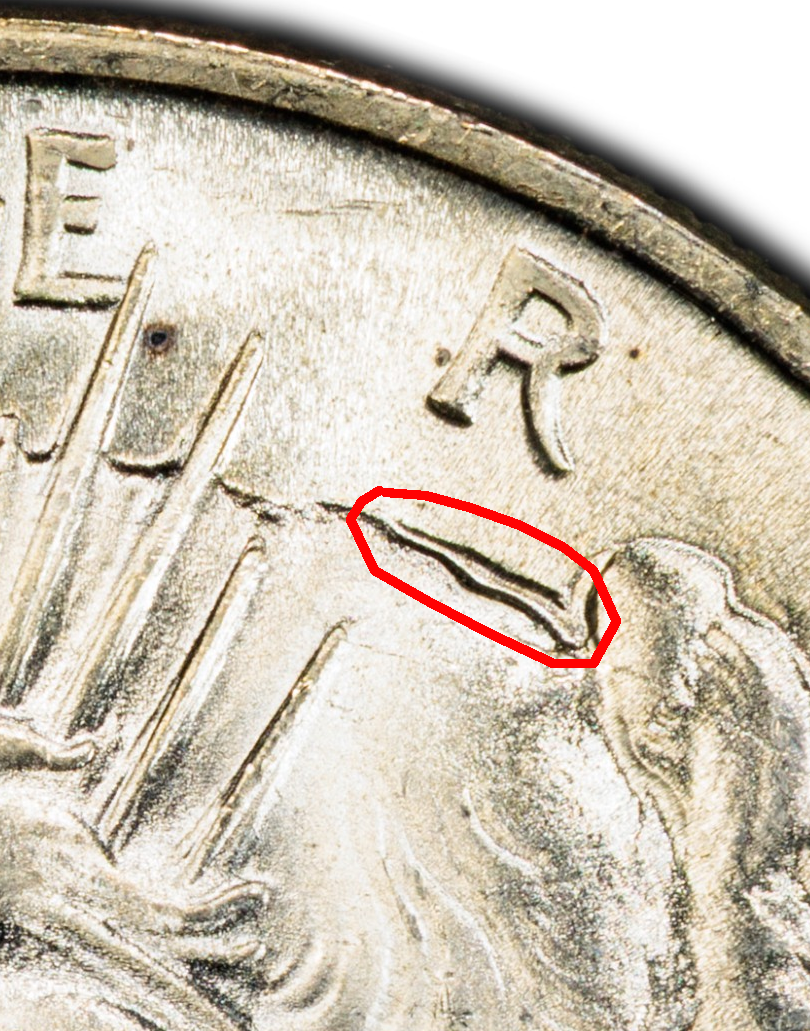
Overlay analysis: The smoking gun for die clashes (Source: Forum Discussion)
3. Shoulder Spike Variations
Compare against this diagnostic example showing:
- Spear-like projections born from overzealous die polishing
- Associated die breaks creating “lightning bolt” effects
- Distinct metal flow patterns confirming strike authenticity
When VAM Falls Silent: Charting Unlisted Varieties
@PROMETHIUS88 voiced every error hunter’s rite of passage:
“I’ve combed VAMWorld and Varieties Plus – is this thing uncharted territory?”
Welcome to the frontier, explorer! Unknown varieties demand:
- Side-by-side comparisons under calibrated lighting
- Overlay photography to document luster disruption patterns
- Third-party verification – NGC and PCGS live for these submissions
Grading Alchemy: How Mint Condition Multiplies Value
The poster’s PCGS 64 example shows why eye appeal matters. Witness the premium:
| Grade | Standard 1922-P | Major Die Break Variety |
|---|---|---|
| MS-60 (Good Luster) | $35-$50 | $150-$300 |
| MS-64 (Choice Surfaces) | $75-$125 | $500-$2,500+ |
The Three-Point Inspection Protocol
- Magnification Recon: 10x loupe scan of crown details and eagle’s breast feathers
- Die Marriage Hunt: VAMWorld deep dive with attention to die state progression
- Surface Forensics: Verify raised anomalies (key minting evidence) vs. post-strike damage
Why This Coin Matters: A Collector’s Manifesto
Every 1922-P Peace Dollar is a frozen moment from the Roaring Twenties mint floor – overworked presses pounding out history one silver disc at a time. The forum discussion proves even veterans can discover new chapters in numismatic history. That “common” coin in your tray? It’s a detective story waiting to be solved, a retirement fund waiting to be unlocked.
Remember: Die cracks expand with each strike, clash marks soften over time, and provenance can transform scrap silver into museum pieces. Your next coin show bargain might just be the discovery that rewrites the VAM catalog. Now go check those Peace Dollars – I’ll be waiting for your “Eureka!” email.
Related Resources
You might also find these related articles helpful:
- Unveiling the 1922-P Peace Dollar: A Die Clash Mystery from America’s Roaring Twenties – The Historical Significance of America’s Peace Dollar Hold history in your palm – that’s the magic of …
- Decoding the 1922-P Peace Dollar Die Clash: Market Value Beyond Catalog Prices – What truly determines a coin’s numismatic value? As a lifelong collector and professional numismatist specializing…
- Unearthing Numismatic Gold: How Professional Grading Reveals Bargain Bin Treasures – The Professional Grader’s Perspective: Where Condition Reigns Supreme After decades scrutinizing coins under my loupe, I…
