


How to Maximize Profits Selling the 1920 Gold Wilson Dollar – Manila Mint Opening – HK-1031 at Auction: An Auction House Director’s Guide to Hammer Price
November 6, 2026The Capital Gains and Tax Guide for Selling 1920 Gold Wilson Dollar – Manila Mint Opening – HK-1031
November 6, 2026
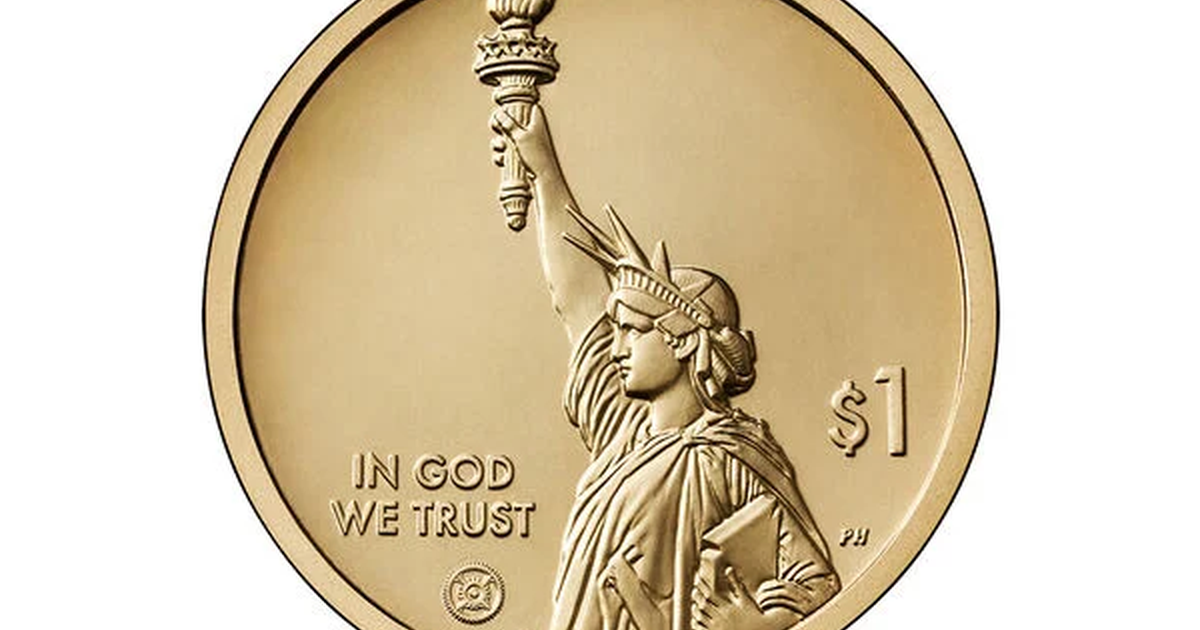
Selling high-value collectibles comes with specific tax rules that most hobbyists ignore until it’s too late. I want to walk you through the financial implications, plainly and honestly.
I’ve examined hundreds of collections over my career as a CPA specializing in collectibles, and I can tell you the pattern is always the same. A collector celebrates a milestone — a 75th birthday, a diamond anniversary, a lifetime of accumulation. Friends post beautiful coins to gaze at. Then, years later, someone decides to sell. That 1951 PF65+CAM half dollar submitted in August. That circulated Peace dollar that is the star of a set. That matching toned Buffalo nickel pair bought on the BST. That 1911-D that didn’t want to sit alone. When that coin sells for a serious gain, the tax question arrives with no warning.
In my experience, hobbyists are excellent at grading, attribution, and provenance. We know a sharp strike when we see one. We know luster. We know patina. We are far less prepared for the Internal Revenue Code. The IRS does not treat a rare coin like a share of an index fund. It does not treat a casual BST sale like a dealer inventory sale. And it absolutely does not forgive you for failing to track cost basis simply because you bought the coin at a show in 1987 and the receipt is long gone. This guide is my attempt, as a CPA who also collects, to explain capital gains tax on collectibles, 1099-K rules, cost basis tracking, and dealer vs collector status in plain language — before you list that birthday coin.
1. Why a Birthday Collection Becomes a Tax Problem at 75
When a forum thread fills with birthday wishes, it is also documenting something the IRS cares about deeply: holding period and intent. A collector who has held coins for decades, who posts them for enjoyment, who receives a mention in PCGS Magazine, who builds a circulated Peace set one coin at a time — that is powerful evidence of collector intent. It is also evidence of long-term ownership.
That matters. The tax consequences change dramatically depending on how long you held the coin and why you held it. A coin bought for your set and held for 20 years is a capital asset. A coin bought last month to flip on eBay is potentially inventory. The IRS looks at frequency of sales, time spent, advertising, business licenses, and whether you held yourself out as a dealer.
I’ve seen clients assume that because a sale was private, friendly, and on a forum BST, it was not reportable. That is wrong. Private does not mean invisible. Friendly does not mean tax-free. The gain is taxable whether you receive a form or not. The form simply changes how the IRS finds out.
What I Tell Every Client at the First Meeting
- The sale is taxable when you sell, not when you buy. Buying a coin is not a taxable event. Selling, exchanging, or even donating it can be.
- Your profit is sale price minus basis minus selling expenses. Not sale price alone.
- Your records are your defense. If you cannot prove basis, the IRS can treat your basis as zero.
Think of that birthday thread as a celebration, but also as a paper trail. Dates, photos, purchase stories, and “I bought this last weekend” posts all help establish when and how you acquired a coin. Preserve them. I do.
2. Capital Gains Tax on Collectibles: The 28% Rate Trap
This is the section that shocks most numismatists. Collectibles are not taxed like stocks. Not even close.
Under current law, most long-term capital gains on stocks, mutual funds, and real estate are taxed at 0%, 15%, or 20%, depending on income. Collectibles — defined by the IRS to include coins, stamps, art, antiques, and other tangible items held for more than one year — are subject to a maximum rate of 28% on the gain portion attributable to collectibles.
I’ve examined returns where a client sold a high-grade key date and proudly reported a long-term gain expecting 15%. When we reclassified it correctly as a collectible, the tax jumped significantly. That 28% rate is not a penalty for collecting. It is Congress’s view that collectibles are a different class of asset, often held for personal enjoyment rather than investment, and they receive less favorable treatment.
How the 28% Rate Actually Works
Suppose you bought a toned Buffalo nickel for $500 in 2010 and sold it in 2025 for $2,500. Your gain is $2,000. If you are in the 15% bracket for regular capital gains, you might expect $300 in tax. For a collectible, the maximum federal rate on that $2,000 gain is 28%, or $560, before state tax. The actual rate depends on your overall taxable income, but the ceiling is higher and the benefit of lower brackets is limited.
Short-term gains — coins held for one year or less — do not get the 28% collectibles rate. They are taxed as ordinary income, which can be even higher. That is why the collector who flips a 1951 proof half dollar within months faces a different outcome than the collector who held a circulated Peace dollar for a decade.
Numismatic Examples From Real Collections
- A circulated Peace dollar set: Individual coins may have modest gains, but a complete set sold together can create a large aggregate gain subject to the collectibles rate. Even a rare variety in circulated condition can carry real numismatic value.
- A 1911-D Lincoln cent in high grade: A single key-date sale can produce a five-figure gain. The 28% rate applies to the entire gain if it qualifies as a collectible, whether it shows full mint luster or honest wear.
- A toned Type 1 coin with vibrant color: Toning premiums are still collectible gains. The IRS does not care that the value comes from eye appeal rather than rarity.
Actionable takeaway: Before you sell, estimate your tax at 28% for long-term collectible gains, not at your stock market rate. Set aside that amount. In my experience grading a client’s portfolio, the ones who set aside tax in a separate account are the ones who do not panic in April.
3. Cost Basis Tracking: The Ledger That Saves You Thousands
Cost basis is the most important, and most neglected, concept in collectibles taxation. Basis is generally what you paid for the coin, plus certain adjustments, minus certain adjustments. When you sell, gain equals amount realized minus adjusted basis.
I’ve examined collections where a 75-year-old collector could tell me the exact VAM variety, mint mark, and toning characteristics of every coin, but could not tell me what he paid for any of them. That is a common and expensive problem. Without basis, you cannot prove a smaller gain. The IRS default position, if you have no records, is that your basis is zero, meaning the entire sale price is gain.
What Counts Toward Basis
- Purchase price: The amount you paid the dealer, auction house, or fellow collector.
- Sales tax and shipping: Amounts you paid to acquire the coin.
- Grading fees: PCGS or NGC submission fees, shipping to the grader, and membership costs allocable to that coin, if you can document them.
- Authentication and restoration costs: Fees for professional conservation, if applicable and documented.
- Selling expenses reduce amount realized, not basis: Auction commissions, eBay fees, insured shipping to the buyer, and dealer consignment fees reduce your proceeds.
How to Reconstruct Basis After 75 Years
You do not need a perfect ledger from 1951. You need reasonable records. I have successfully reconstructed basis using:
- Dealer invoices and auction price lists
- Cancelled checks, credit card statements, and PayPal records
- Coin show receipts and bourse purchase logs
- Insurance appraisals that listed values at a specific date
- Photographs with dates, forum posts, and emails showing purchase price
- Contemporaneous notes in a collection inventory
For inherited coins, basis is generally the fair market value at the date of inheritance — the stepped-up basis. That is a gift from the tax code to the next generation, but only if you can document the value. An appraisal at inheritance is worth thousands later.
For gifted coins, the recipient generally takes the donor’s basis. If your friend gave you his favorite coin for your birthday, you inherited his tax history along with the coin. Keep that paperwork.
Actionable takeaway: Create a simple spreadsheet today. One row per coin: date acquired, source, price paid, grading cost, current grade, and notes. Photograph the coin and the receipt together. In my experience, this one habit saves more tax dollars than any deduction.
4. The 1099-K Confusion: eBay, Heritage, BST Sales, and What the Form Really Means
Every year I get the same panicked call in January: “I got a 1099-K for $25,000. Does that mean I owe tax on $25,000?” The answer is almost always no, but the form matters.
A 1099-K is an information return from a payment processor — eBay, PayPal, Venmo, Cash App, Heritage Auctions, Stack’s Bowers, and others — reporting gross payments for goods and services. It is not a tax bill. It is a report of gross proceeds before fees, before returns, before basis.
Thresholds for 1099-K issuance have changed frequently in recent years due to IRS implementation delays, and they continue to be a source of confusion. Regardless of the threshold in a given year, the underlying tax law has not changed: if you sell a collectible at a gain, you must report it, even if you never receive a 1099-K. Conversely, receiving a 1099-K does not mean the entire amount is profit.
Reconciling a 1099-K on Your Return
When I prepare a return, I reconcile the 1099-K to the actual sales:
- Start with gross payments reported.
- Subtract returns, refunds, and chargebacks.
- Subtract payment processor fees and auction commissions.
- Subtract cost basis for each coin sold.
- The remainder is your gain or loss.
If your 1099-K shows $10,000 from selling three coins that cost you $8,500 in total, your gain is $1,500, not $10,000. You report the gross on the appropriate line and then report basis and expenses to arrive at the net. You must keep the reconciliation. The IRS computer will compare the 1099-K to your return, and a mismatch without explanation triggers a notice.
Private Sales and the BST
Sales on a forum Buy-Sell-Trade board, at a coin show for cash, or to a local dealer may not generate a 1099-K. That does not make them tax-free. Cash sales are still sales. Barter — trading one coin for another — is also a taxable disposition. If you trade a toned Buffalo nickel worth $1,000 for a Peace dollar worth $1,000, you have disposed of an asset.
I’ve examined cases where a collector traded up for years, never selling for cash, and believed no tax was due. The IRS disagrees. An exchange is treated as a sale of the coin given up.
Actionable takeaway: Keep a sales log that matches every 1099-K you receive, and also log sales where no form was issued. Note date, buyer type, gross price, fees, basis, and gain. That log is your audit protection.
5. Dealer vs Collector Status: The IRS Line You Don’t Want to Cross
This is the most fact-intensive area, and the one where intent matters most. The IRS distinguishes between a collector selling from a personal collection and a dealer selling inventory.
A collector holds coins as capital assets. Gains are capital gains, subject to the 28% collectibles rate for long-term gains. A dealer holds coins as inventory. Gains are ordinary income, subject to self-employment tax, and reported on Schedule C. Ordinary income can be taxed at higher marginal rates, plus 15.3% self-employment tax on net earnings. The difference can be enormous.
Factors the IRS Considers
- Frequency and continuity of sales
- Time devoted to buying and selling
- Whether you advertise as a dealer or maintain a business website
- Whether you have a business license or dealer designation
- Whether you buy with the intent to resell quickly for profit
- Whether you maintain inventory records separate from a personal collection
- Whether you are a member of a professional numismatic association as a dealer
No single factor controls. It is the totality of circumstances. A collector who sells a few coins from a 75-year accumulation to fund retirement is a collector. A person who buys 50 coins at shows every weekend, grades them, lists them on eBay within days, and sells 200 coins a year is likely a dealer, even if he calls himself a collector.
Why This Matters for Your Birthday Coins
If you have held coins for decades, posted them for pleasure, and sell them occasionally, you are likely a collector. Document that. Keep your collection inventory separate from any business records. Do not commingle funds. File your gain as a capital gain, not as business income.
If you have crossed into dealer activity, embrace it properly. Register your business, keep inventory records, pay estimated taxes, and consider whether an S corporation or LLC makes sense. Trying to have it both ways — dealer income with collector tax rates — is where penalties begin.
I’ve seen a client reclassified by the IRS after years of treating flip income as capital gains. The reclassification resulted in additional income tax, self-employment tax, and interest. The lesson: status is determined by what you do, not what you call yourself.
Actionable takeaway: If you sell more than a handful of coins per year, or if you buy primarily to resell, talk to a CPA before year-end. A one-hour consultation on status can save you from a multi-year audit.
6. Holding Periods, Losses, and Wash Sale Myths
Collectibles follow the same holding period rules as other capital assets: more than one year is long-term, one year or less is short-term. The holding period generally starts the day after you acquire the coin and ends on the sale date.
Losses are also important. If you sell a coin for less than your basis, you have a capital loss. Capital losses can offset capital gains, which is valuable planning. A loss on a circulated Peace dollar can offset a gain on a high-grade 1951 proof half dollar in the same year.
Common Myths I Hear in My Office
- “I can deduct a loss on a coin I still own.” No. A loss is only realized when you sell or otherwise dispose of the coin.
- “Wash sales apply to coins like stocks.” The wash sale rule for stocks and securities does not generally apply to collectibles in the same way, but related-party and other rules can still affect losses. Do not assume you can sell at a loss and immediately repurchase without consequence — get advice.
- “If I lose money, I don’t need to report it.” Wrong. You must report losses, and they can benefit you by offsetting gains.
- “Personal use property losses are deductible.” Coins held for personal enjoyment are generally personal use property. Losses on personal use property are not deductible, but gains are taxable. This is a critical distinction. A coin in your display case that you enjoy is personal use. A coin held for investment may be treated differently. The line is subtle and fact-dependent.
In my experience, the personal use property rule surprises collectors most. You cannot deduct a loss on your personal collection, but you must pay tax on a gain. That asymmetry makes basis tracking and gain harvesting even more important.
Actionable takeaway: Harvest losses strategically in a year when you have large gains. Sell the losers, keep the winners, and use the loss to reduce the 28% tax on the gain. Document the sale thoroughly.
7. Planning a Sale: Timing, Charitable Giving, Estate, and Retirement
At 75, selling is often not about speculation. It is about estate planning, retirement income, and ensuring a collection built over a lifetime is handled responsibly. Tax planning should be part of that conversation.
Timing Sales Across Tax Years
Spreading a large sale across two tax years can keep you in a lower bracket and reduce the portion of gain taxed at the highest rate. Selling in December versus January can change the tax year entirely. If you are considering selling a major rarity, model the tax before you consign it.
Charitable Contributions of Appreciated Coins
Donating an appreciated collectible held for more than one year to a qualified charity can be a powerful strategy. You may receive a charitable deduction for the fair market value, and you avoid paying capital gains tax on the appreciation. The rules are complex — the charity must be qualified, you need a qualified appraisal for gifts over $5,000, and the deduction is subject to limits — but for a collector with a truly valuable coin, it can be superior to selling and donating cash.
Estate and Stepped-Up Basis
For many collectors at this stage of life, the most valuable tax benefit is stepped-up basis at death. If you pass a coin to your heirs, they generally receive a basis equal to its fair market value at your death. The lifetime appreciation during your ownership is effectively erased for income tax purposes. That is why documenting value at inheritance, and maintaining an updated inventory with appraisals, is so important for the next generation.
I’ve examined estates where heirs inherited a magnificent collection with no inventory, no appraisals, and no basis records. They sold the coins years later with no idea of value at inheritance, and overpaid tax. A simple, updated inventory — even a spreadsheet with photos and recent auction prices — prevents that outcome.
Estimated Taxes and Record Retention
Large gains can create a large tax bill in April with no withholding. The IRS expects you to pay estimated taxes quarterly if you owe more than a threshold. Failure to do so can result in penalties, even if you pay in full by April. Plan for estimated payments when you plan a major sale.
Keep records for at least three years after filing, and longer for basis records. Basis records should be kept as long as you own the coin, plus the retention period after sale. For a 75-year collection, that means preserving records for a lifetime.
8. Conclusion: Collectibility, Historical Importance, and the Responsibility of Selling Well
The coins posted for a 75th birthday — the toned Buffalo nickels, the circulated Peace dollars, the 1911-D, the 1875 with provenance, the 1951 PF65+CAM half dollar, the Type 1 with vibrant color — are more than assets. They are historical artifacts, each carrying a story of minting, circulation, toning, grading, and preservation. Their collectibility comes from rarity, condition, eye appeal, and provenance. Their historical importance comes from the eras they represent: the Peace dollar commemorating the end of World War I, the Buffalo nickel depicting a vanishing American icon, the Lincoln cent born in the year of a birth.
Selling them well means honoring both their numismatic value and their tax reality. Capital gains tax on collectibles at up to 28%, 1099-K reporting from modern platforms, meticulous cost basis tracking, and a clear understanding of dealer vs collector status are not obstacles to collecting. They are the framework that allows a lifetime of collecting to be realized responsibly, whether you sell to fund retirement, donate to charity, or pass the collection to heirs who will appreciate it as you did.
I’ve examined many collections, and the ones that fare best are the ones where the collector treated record-keeping as part of the hobby — as essential as learning to grade or attribute a VAM. Start your ledger today. Photograph your coins. Save your receipts. Reconcile your 1099-Ks. And when you are ready to sell, model the tax before you list the coin.
Happy birthday to the collector who built a lifetime of memories one coin at a time. May your next sale be as joyful as the acquisition — and may you keep as much of the proceeds as the law allows.
Related Resources
You might also find these related articles helpful:
- Insuring Your PCGS Doily Samples: Why Accurate Appraisals Save Thousands and How to Protect Your Rare Collection – A standard homeowner’s policy simply won’t cover the full numismatic value of your rare collection. If you w…
- How to Maximize Profits Selling a 75th Birthday Tribute Collection — Toned Peace Dollars, Buffalo Nickels, and 1951 Cameo Half Dollars at Auction – There is a massive difference between selling on eBay and consigning to a major auction house. I see it every week. Let …
- Inherited a Collection Like the “Happy Birthday to Me” Coins? What You Need to Know Before Selling – If you inherited this piece, don’t rush it to a pawn shop. I see heirs do that every week. Here’s how to ass…


