


The Buyer’s Mindset: Why Collectors Overpay for an Amazing 1885 CC Morgan PCGS MS68 CAC
September 18, 2026The Global Market: International Demand and Repatriation Forces Behind the Amazing 1885 CC Morgan PCGS MS68 CAC
September 18, 2026
Selling high-value collectibles comes with specific tax rules that most hobbyists ignore until it’s too late. Here’s a breakdown of the financial implications.
I’ve spent over fifteen years working with collectors and investors in the numismatic space, and I can tell you — the number of people who scramble to understand their tax obligations the moment they realize a find has appreciated is staggering. Whether it’s a key-date Morgan dollar or a coveted privy-marked commemorativelike the newly released SemiQ 2026 President Donald J. Trump $1 Coin with its “July 4th” privy mark, that rush of excitement can quickly turn into a cold splash of reality: What do I owe the IRS?
The SemiQ 2026 $1 coin rolls and bags sit at a fascinating crossroads of history and investment. With 250,000 privy-marked coins randomly inserted into rolls — priced at $61 for a 25-coin roll, or $2.44 per unit — and bags at $154.50 for a 100-coin bag ($1.55 per unit), collectors face real financial decisions. Presales of the July 4th privy variants have reportedly reached $400 to $600 or more on the secondary market. Whether you’re a seasoned investor or someone who picked up a few rolls on a whim, understanding the tax landscape is essential before you sell.
Capital Gains Tax on Collectibles: The 28% Rate You Need to Understand
How Collectibles Are Taxed Differently from Stocks
Here’s one of the most important tax facts I share with every client: the IRS taxes long-term capital gains on collectibles at a maximum rate of 28%, not the more favorable 20% rate that applies to most stocks and mutual funds. This distinction hits hard for anyone looking to sell SemiQ 2026 $1 coins — whether you pulled a privy-marked specimen worth hundreds of dollars or are liquidating unopened rolls at a premium.
Let me break it down simply:
- Short-term capital gains (held one year or less): Taxed at your ordinary income tax rate, which could climb as high as 37% depending on your bracket.
- Long-term capital gains (held more than one year): Taxed at a maximum rate of 28% for collectibles, regardless of your income level. That’s notably higher than the standard 20% long-term rate for equities.
- Net Investment Income Tax (NIIT): High-income earners may also face an additional 3.8% surtax on investment income, which can apply to collectible sales as well.
Applying This to the SemiQ 2026 $1 Coin
Say you purchased a roll of SemiQ 2026 $1 coins for $61 and later sold it on the secondary market for $150. Your capital gain is $89. Hold that roll for more than a year, and that gain is taxed at the collectibles long-term rate of up to 28% — roughly $24.92 in federal taxes, not the lower rate you might expect from a “long-term” investment. Hold it for less than a year and you’re in the 32% ordinary bracket? That jumps to $28.48. The difference adds up fast when you’re selling multiple rolls or bags.
Understanding 1099-K Rules for Coin Transactions
When Does the IRS Get a Copy of Your Sale?
Selling your SemiQ 2026 coins through a third-party marketplace — eBay, Heritage Auctions, or a coin show dealer acting as a payment processor? You need to understand the 1099-K reporting rules. Under current IRS guidelines, payment settlement entities must file a 1099-K if your gross transactions exceed $5,000 in a calendar year AND you have at least 200 transactions. But here’s the catch: the IRS has been expanding enforcement around these thresholds, and future regulatory cycles could lower them further.
From my experience advising collectors, here are the scenarios where a 1099-K could land in your inbox:
- Selling multiple rolls or bags through an online marketplace: Sell 10 rolls at $150 each ($1,500 total) but process those through a platform that also handles other transactions pushing you over $5,000 annually with 200+ transactions — and a 1099-K gets generated.
- Auction houses: Major auction houses almost always issue 1099-Ks for sales that meet reporting thresholds, and they frequently report even smaller transactions.
- Direct dealer sales: If a dealer buys your coins directly and pays you cash or via bank transfer, they may or may not issue a 1099-K depending on the transaction structure. But here’s what many collectors miss: you are still obligated to report the gain regardless of whether a form is issued to you.
Important: A 1099-K Reports Gross Income, Not Your Gain
Critical takeaway: The 1099-K reports the gross amount you received — not your cost basis or your actual taxable gain. So the IRS will see a number far larger than what you actually profited. It’s your responsibility to calculate and report the correct gain using your cost basis records.
Cost Basis Tracking: The Most Overlooked Aspect of Coin Collecting Taxes
What Is Cost Basis and Why Does It Matter?
Your cost basis is the original price you paid for the coin, roll, or bag — including any applicable fees, shipping, or premiums. Subtract that from your selling price, and you’ve got your taxable gain. In my practice, I’ve watched collectors lose deductions worth thousands of dollars simply because they didn’t keep records of their original purchases. For coins where mint condition and provenance can dramatically affect numismatic value, those records matter even more.
For the SemiQ 2026 $1 coins, your cost basis would include:
- The purchase price of the roll ($61) or bag ($154.50)
- Any shipping or handling fees
- Premiums paid above face value if purchasing on the secondary market
- Grading or authentication fees if you submitted the coin for professional evaluation (PCGS, NGC, etc.)
Practical Tips for Tracking Your Basis
- Keep every receipt and confirmation email. When you ordered those rolls or bags from the Mint or a distributor, save the transaction records. Screenshots work, but official receipts are far better.
- Create a dedicated spreadsheet. Track each coin or lot with its purchase date, purchase price, selling date, and sale price. This makes tax time straightforward and protects you in an audit.
- Document mixed lots carefully. Bought a bag of 100 coins and later sold individual coins at different prices? You need to track which specific coins you sold and at what price. FIFO (First In, First Out) is the default method, but specific identification is allowed with proper records.
- Record the date of acquisition precisely. This determines whether your gain is short-term or long-term — which, as we discussed, dramatically affects your tax rate.
Dealer vs. Collector Status: Why the IRS Cares About Your Intent
How the IRS Classifies You
This is one of the most consequential distinctions in collectible taxation, and trust me — it trips up even sophisticated sellers. The IRS treats the sale of collectibles differently depending on whether you’re classified as a collector (hobbyist) or a dealer (businessperson).
- Collectors (Hobbyists): Report gains on Schedule D (Capital Gains) and Form 8949. Gains are subject to the 28% maximum long-term collectibles rate. You cannot deduct losses beyond the amount of gains (and only if you itemize deductions — losses from personal-use property are generally not deductible).
- Dealers (Businesses): Report income on Schedule C (Profit or Loss from Business). This lets you deduct business expenses — cost of inventory, shipping, grading fees, advertising, booth fees at coin shows, and more — which can significantly reduce your taxable income. Dealers can also deduct losses against other income.
What Triggers Dealer Classification?
The IRS examines several factors to determine your status, and in my experience assessing the intent behind collector behavior, the line can blur faster than you’d think:
- Frequency of transactions: Are you buying and selling coins regularly, or was the SemiQ 2026 purchase a one-time event?
- Intent at the time of purchase: Did you buy the rolls expecting to resell for profit, or were you genuinely collecting for enjoyment?
- Level of activity: Do you maintain inventory, hold a dealer’s license, or operate a storefront or online shop?
- Dependence on income: Do you rely on coin sales as a significant source of income?
Actionable advice: If you bought SemiQ 2026 rolls as a casual collector and plan to sell only a few, report as a collector. But if you’re systematically buying rolls and bags to flip privy-marked coins for profit, consider registering as a dealer — the deduction opportunities can be substantial.
Special Considerations for the SemiQ 2026 July 4th Privy Mark Coins
The Unique Tax Implications of a Date-Struck Rarity
What makes the SemiQ 2026 Trump $1 coins particularly compelling from a tax perspective is the July 4th privy mark — a special issue where 250,000 coins were reportedly struck on July 4th, 2026, and randomly mixed into rolls and bags. The Mint’s product description states: “Special offering: 250,000 Semiquincentennial President Donald J. Trump $1 Coins with a special-issue ‘July 4th’ privy mark have been randomly included in the Rolls & Bags. These coins were struck on July 4th.”
This provenance carries real weight. As one forum participant astutely observed, these privy marks aren’t merely decorative — they represent the exact date of production, making them a documented part of the coin’s history. With their eye appeal, documented rarity, and presales reportedly reaching $400 to $600 on the secondary market, a collector who paid $2.44 per coin in a roll could face a gain of several hundred dollars per coin. That’s the kind of rare variety that transforms a casual purchase into a significant financial event.
Calculating Gains on Privy-Marked Coins Found in Rolls
Here’s where it gets interesting. If you purchased a roll for $61 and discovered a July 4th privy coin inside, your cost basis for that specific coin is technically the prorated amount — roughly $2.44 (the per-unit cost of the roll). Sell that privy coin for $500, and your gain is approximately $497.56, taxed at the collectibles long-term rate of 28% (assuming you held the roll for more than a year). That works out to roughly $139.32 in federal taxes on a single coin find.
For those who find multiple privy coins — with approximately one privy per 33 coins, each roll could theoretically contain one — the tax liability compounds quickly. And remember, the luster and strike quality of these coins, combined with their unique patina from handling, all factor into the final sale price and, consequently, your tax obligation.
Planning Your Exit Strategy: Tax-Efficient Selling for Collectors
Strategies I Recommend to My Clients
Selling collectibles doesn’t have to be a tax nightmare if you plan ahead. Based on my experience advising numismatic clients, here are strategies that actually minimize your tax burden:
- Hold for more than one year. This converts short-term gains (taxed at ordinary income rates) into long-term gains (taxed at the 28% collectibles rate). Even though 28% isn’t the lowest possible rate, it’s significantly better than ordinary income treatment.
- Sell in low-income years. If you have a year where your total income dips, your effective tax rate on collectible gains may also be lower. Timing your sale can save real money.
- Sell in stages. Instead of liquidating all your SemiQ 2026 rolls in a single year, spread sales across multiple years to keep each year’s gain manageable and potentially stay within lower capital gains brackets.
- Donate to charity. Donating appreciated coins to a qualified charitable organization lets you claim a deduction for fair market value — potentially avoiding capital gains tax entirely. This is especially powerful for high-value privy-marked coins with strong collectibility.
- Keep meticulous records of all transactions. Your cost basis documentation is your best defense in an audit and your greatest tool for accurate reporting.
What If You Sell at a Loss?
While unlikely for sought-after items like the July 4th privy coins, it’s possible that some SemiQ 2026 coins could depreciate if market interest wanes. Unfortunately, for personal-collecting hobbyists, losses on personal-use property are generally not deductible. However, if you’re classified as a dealer, losses become deductible business losses. This is yet another reason your dealer vs. collector classification matters.
Conclusion: The Historical Significance and Collectibility of the SemiQ 2026 $1 Coin
The SemiQ 2026 President Donald J. Trump $1 Coin with its “July 4th” privy mark represents a fascinating intersection of modern numismatics, American history, and investment consideration. Struck on the Fourth of July, 2026 — the exact date celebrating America’s 250th birthday — these coins carry a provenance that is virtually unmatched in regular-issue U.S. coinage. As one collector in the forum discussion rightly pointed out, very few regular-issue U.S. coins can claim they were produced on a specific, historically significant date.
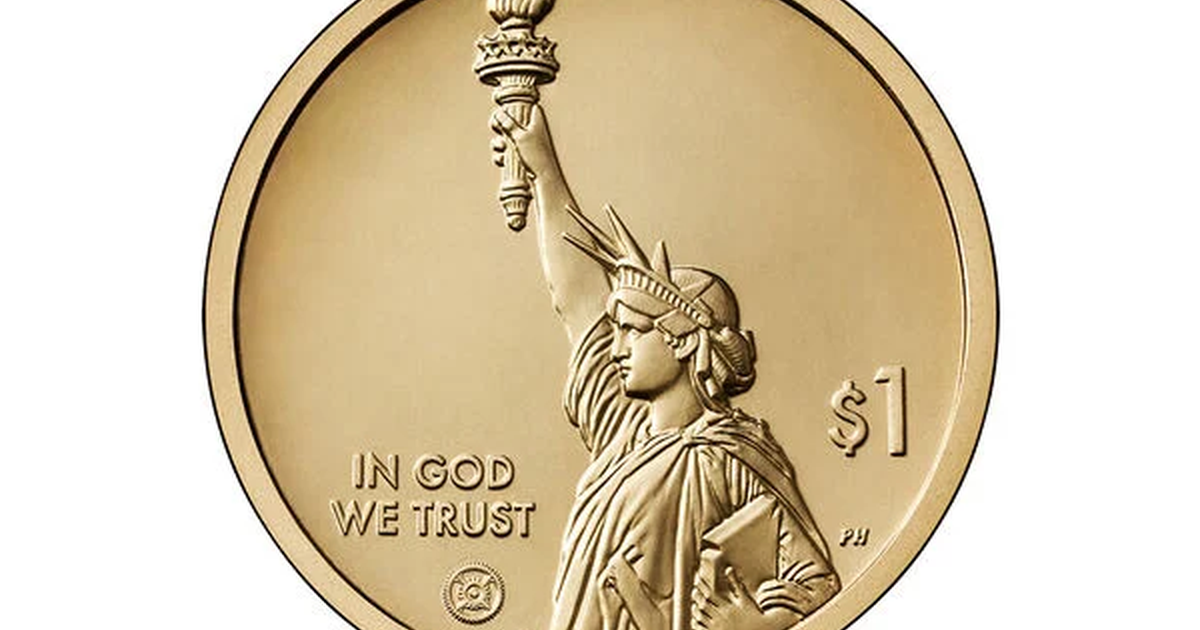
The obverse features the portrait of President Donald J. Trump, while the reverse depicts the Statue of Liberty, consistent with the Semiquincentennial series design framework. The “July 4th” privy mark, struck exclusively on coins produced on that date, adds a layer of historical documentation that transcends typical commemorative marketing. With an estimated 250,000 privy-marked coins distributed through rolls and bags — and potentially more through Federal Reserve distribution channels — these coins occupy a unique position in the modern numismatic landscape.
From a tax perspective, the SemiQ 2026 $1 coin rolls and bags are subject to all the same capital gains rules that govern any collectible transaction. The 28% maximum long-term rate, the complexities of 1099-K reporting, the necessity of rigorous cost basis tracking, and the dealer vs. collector classification all apply. Whether you’re a hobbyist who picked up a roll on a whim or a serious investor building a position, understanding these financial implications before you sell is not just wise — it’s essential.
The coins themselves, whether you find them in a sewn-shut bag at $1.55 per unit or discover a July 4th privy specimen in a $61 roll, represent a tangible piece of American numismatic history. Their value — both historical and monetary — will be shaped by collector demand, population figures, and the passage of time. Their luster and eye appeal will draw collectors for generations. Plan your selling strategy accordingly, document everything, and enjoy the hunt.
Related Resources
You might also find these related articles helpful:
- How to Maximize Profits Selling SemiQ 2026 Trump $1 Coin Rolls and Bags at Auction: A Director’s Guide to the July 4th Privy Hunt – The Auction House Advantage: Why Your SemiQ Trump Dollars Deserve More Than an eBay Listing There is a massive differenc…
- Inherited SemiQ 2026 $1 Coin Rolls & Bags with July 4th Privy Mark? What You Need to Know Before Selling — An Estate Liquidator’s Guide – Introduction: Don’t Rush to the Pawn Shop Just Yet If you inherited this piece, your first instinct might be to he…
- Is the SemiQ 2026 $1 Coin Rolls & Bags — “Let the Privy Hunt Begin” — a Smart Long-Term Investment? Analyzing Historical Appreciation, Liquidity & Inflation Hedging Potential – The Hard Asset Opportunity: Why Numismatics Belongs in Your Portfolio For collectors looking to diversify into tangible …


