


Spotting the Difference: Proof vs. Business Strike When Buying Cheap Shipped Coins
September 17, 2026How to Photograph Luster When Shipping Coins USPS: A Masterclass in Axial Lighting, Macro Photography, and Capturing Cartwheel Brilliance on Raw Half Dollars and More
September 17, 2026
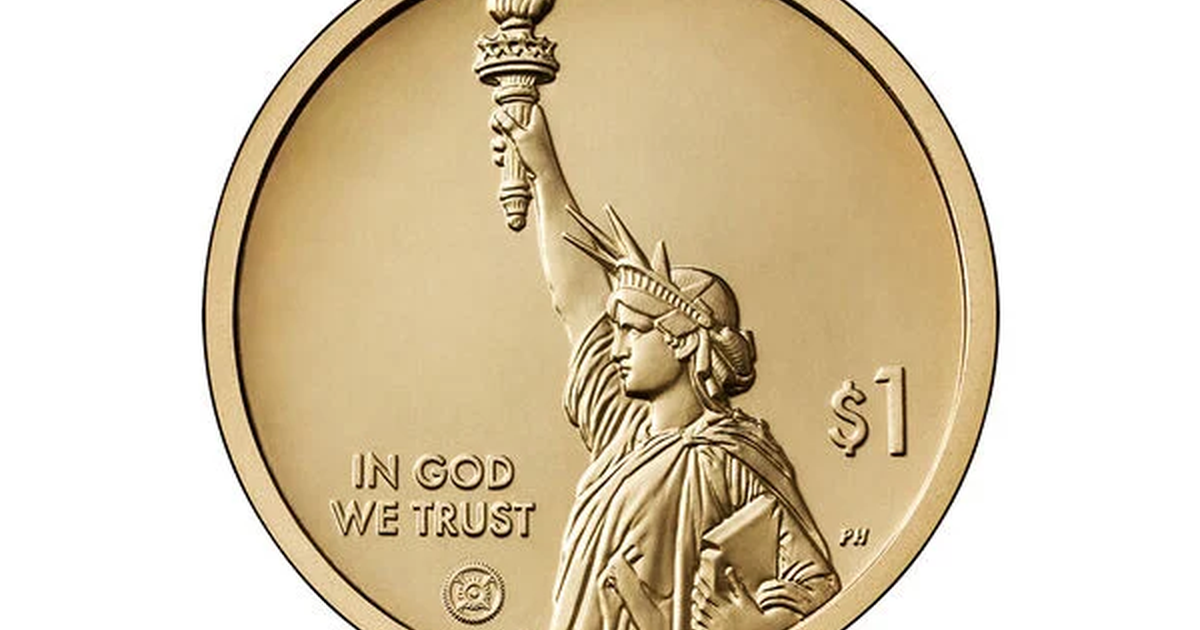
Where you choose to sell your coins can make a huge difference in your final profit. Let’s compare the modern digital marketplace to the traditional dealer bourse floors.
As an online coin dealer who has spent years navigating both the eBay marketplace and the crowded aisles of coin show bourse floors, I can tell you one thing with absolute certainty: the decision of where you sell your coins is every bit as important as what you sell. From shipping logistics and fee structures to dealer buy prices and buyer trust, the differences between these two selling venues are profound—and often overlooked by casual collectors. Let me break it down. I’ll cover the critical factors every seller should consider before listing that next raw half dollar or key date variety.
The eBay Marketplace Experience: Convenience at a Cost
The Digital Arena and Its Hidden Expenses
In my experience grading and listing coins on eBay over the past two decades, the platform has remained the dominant force in online numismatic commerce. There’s a reason for this: eBay offers unparalleled reach. Your listing is seen by millions of potential buyers worldwide. The infrastructure for payment processing, shipping labels, and feedback systems is already built in.
But convenience comes at a cost. I’ve examined countless transactions where sellers underestimated the cumulative impact of eBay’s fee structure. Here’s what you need to know:
- Final Value Fees: eBay typically charges 13.25% of the total amount of the sale (including shipping charges up to $7.99), plus a $0.30 per-order fee. For a $25 raw half dollar, that’s roughly $3.50 in fees before you even factor in shipping costs.
- Insertion Fees: While many listings are free, promoted listings and certain categories incur insertion fees that eat into thin margins.
- Payment Processing: eBay’s managed payments system deducts an additional percentage, consolidating fees that used to be split between PayPal and the platform.
- Shipping Costs: As I’ve observed in numerous forum discussions about the cheapest ways to ship a raw coin, sellers face a real dilemma. A simple letter envelope with a stamp costs as little as $1.31 for a sub-ounce coin in a flip, but it’s risky. Bubble mailers cost around $8 or more, and priority mail flat rate options—while safer—add significant overhead per transaction.
The eBay Buyer Expectation Factor
One critical aspect I’ve encountered repeatedly is buyer expectation. eBay buyers increasingly expect professional packaging, tracking, and insurance—especially for coins valued over $25. I once received a message from a buyer who complained about a raw Barber quarter arriving in a simple flip inside a standard envelope. The coin was fine—a low-grade example that worked perfectly fine—but the buyer demanded a refund based solely on packaging. This is the reality of online selling: your reputation is only as strong as your last shipment.
And it’s not just about packaging. Buyers pay attention to eye appeal—the way a coin is presented, photographed, and described. A coin with attractive luster and pleasing patina can command more attention in a listing than one photographed poorly in dull lighting. First impressions matter enormously in the digital marketplace.
I remember a story shared in a forum about a customer who would spend $50,000 on coins but would cheap out on shipping, once sending a 1798 Bust Dollar in Extra Fine condition through a plain envelope. When it arrived, the envelope showed a slit at the bottom where the coin had rolled back and forth—luckily still inside. Imagine if that had happened on eBay with an active feedback system. The damage to a seller’s reputation can be irreversible.
The Coin Show Floor: A Different Selling Arena
Bourse Floor Etiquette and Personal Commerce
Walking onto a coin show bourse floor is a completely different experience from sitting at your desk listing items online. I’ve set up tables at dozens of conventions, and the etiquette, dynamics, and economics are distinct in important ways.
At a coin show, you’re selling face-to-face. There are no insertion fees, no final value fees, and no shipping costs to factor into the transaction. However, the buy prices offered by dealers at shows tend to be significantly lower than what you’d realize through an eBay sale. This is a fundamental tradeoff: immediacy versus maximum return.
Coin show etiquette demands professionalism. As someone who has both bought and sold on the bourse floor for years, I can outline the key behavioral expectations:
- Don’t approach a dealer’s table while they’re in a transaction. Wait your turn. Interrupting a negotiation is a serious faux pas.
- Handle coins only when invited. Many dealers will offer you a flip to examine, but reaching across uninvited signals disrespect for their inventory.
- Negotiate respectfully. Dealers at shows are buying inventory to resell. Their buy price reflects their need for margin. Haggling aggressively over a few dollars on a $50 coin damages your reputation for future shows.
- Bring your own grading tools. A good loupe and a reference book show that you’re serious. Dealers respect knowledgeable buyers.
- Arrive early. The best buys happen in the first hour before the floor saturates with collectors.
Show Floor Momentum and Urgency
Coin shows function as concentrated liquidity events. Hundreds—if not thousands—of collectors and dealers converge in one location, creating a marketplace that rivals eBay in volume but operates on entirely different mechanics. I’ve seen dealers sell entire mint rolls of Mercury dimes within the first afternoon by pricing competitively and riding the wave of show-day excitement. There’s an energy on that floor that no online listing can replicate.
Understanding eBay Fees and Their Impact on Your Bottom Line
Breaking Down the Math
Let me illustrate with a concrete example from my own dealing. Suppose you have a raw Seated Liberty half dollar graded Fine, with a market value of approximately $25. Here’s how the economics compare:
eBay Sale Scenario:
- Sale Price: $25.00
- eBay Final Value Fee (13.25% + $0.30): ~$3.61
- Shipping (bubble mailer): ~$8.00 (or $1.31 first class with risky packaging)
- Net Profit (with bubble mailer): $25.00 – $3.61 – $8.00 = $13.39
- Net Profit (with first class envelope): $25.00 – $3.61 – $1.31 = $20.08 (but with higher risk of damage claims)
Coin Show Sale Scenario:
- Sale Price to Dealer: ~$15.00-$18.00 (typical dealer buy price for a $25 coin)
- Fees: $0 (no platform fees)
- Shipping: $0 (cash transaction)
- Net Profit: $15.00-$18.00
As you can see, the margins can be surprisingly close—especially when eBay fees and shipping costs are factored in. However, the coin show dealer is offering immediate liquidity with zero risk, while the eBay seller retains the potential for a higher payout at the cost of time, fees, and shipping risk.
Dealer Buy Prices at Coin Shows vs. Online
How Dealers Determine Buy Prices
One of the most misunderstood aspects of numismatic commerce is how dealers arrive at their buy prices. In my experience, a dealer purchasing at a coin show typically offers 55% to 75% of retail market value for common dates, and 40% to 60% for scarce or key-date varieties. This margin is necessary to cover overhead, inventory holding costs, and the risk of depreciation.
Online, the dynamic shifts. When you sell on eBay, you’re accessing retail buyers directly and capturing the full retail price minus fees. This is where serious sellers find their advantage. However, it requires:
- Accurate grading and honest descriptions
- Professional photography
- Competitive pricing based on recent sold comparables
- Reliable shipping practices that protect your reputation
The “Tom Brown” Principle
I often think about the cautionary tale of the buyer who spent $50,000 on coins but nickel-and-dimed sellers on shipping. Whether or not the story is apocryphal, it illustrates a real phenomenon: the most serious collectors understand that cutting corners on transaction logistics devalues the entire hobby. As a dealer, I’d rather transact with someone who respects the process than with a high-spender who haggles over a $1.31 stamp.
Liquidity: How Fast Can You Cash Out?
Speed of Sale Comparison
Liquidity—the ease with which an asset can be converted to cash—varies dramatically between eBay and coin shows:
- Coin Shows: Instant. You walk up to a dealer, negotiate, and walk away with cash. For common dates and mid-grade coins, this immediacy is invaluable, especially if you’re liquidating an estate or need emergency funds.
- eBay: Typically 3-14 days from listing to payment received. Popular coins in the $10-$50 range tend to sell within 24-72 hours if priced competitively. Scarce varieties may sit for weeks or months.
In my experience, the liquidity advantage of coin shows is underappreciated. A raw Kennedy half dollar in a standard roll can be sold at a show within minutes. The same coin listed on eBay might attract 47 watchers but only sell if priced within $1 of the current market. The psychology differs: show buyers are impulse-driven, while eBay buyers are comparison-shopping researchers.
Online Reputation and Trust Factors
The Feedback Economy
One area where eBay holds an undeniable advantage is its feedback and reputation system. I’ve built my online presence over 15+ years of consistent, honest dealing. My feedback score opens doors—buyers trust me, offer higher prices for my listings, and return for future purchases. This reputation has tangible monetary value.
At coin shows, reputation is built differently. It’s verbal, relational, and cumulative. A dealer who has been attending the same regional show for 20 years has built trust through face-to-face interactions. A first-time exhibitor must work harder to establish credibility, often offering premium buy prices to attract initial inventory.
Red Flags That Damage Seller Reputation
Based on my years in the business, here are the most common mistakes I see sellers making that destroy trust:
- Under-grading coins: Describing a VF coin as AU erodes credibility instantly when the buyer receives it.
- Inadequate shipping: Sending valuable coins in unprotected envelopes—as discussed in countless forum threads about the cheapest shipping methods—signals carelessness. A coin sliding around in a #10 envelope is a disaster waiting to happen.
- Misleading photographs: Using cropped or poorly lit images that hide problems.
- Ignoring buyer questions: Prompt, transparent communication is non-negotiable on eBay.
Shipping Strategies for the Modern Coin Dealer
Balancing Cost and Safety
Since the original forum discussion centered on shipping costs, let me offer my professional recommendations based on what I ship regularly. The key principle is this: spend appropriately on shipping relative to the value of what you’re sending.
For coins under $25 in value, I’ve found these methods work well:
- Budget method: Place the coin in a flip, tape the flip securely to a 3×5 index card, place a second card in front, and mail in a 6¾ envelope with two stamps. This costs roughly $1.60-$2.00 and is machine-processable. It works for low-value, low-risk coins.
- Mid-range method: Use a Priority Mail cardboard flat rate envelope, cut into sections, tape the flip to the cardboard, fold and tape, then insert into a standard business envelope. This costs approximately $9.65 but offers excellent protection and is machine-processable if under ¼ inch thick.
- Recommended method for most sellers: A bubble mailer ($8) with the coin in a flip inside. This provides cushioning and protection while remaining cost-effective for eBay shipments.
For coins over $25 in value, I never recommend anything less than a bubble mailer with tracking. The cost difference between a $1.31 first-class letter and an $8 bubble mailer is trivial compared to the potential loss of a $25+ coin. I’ve seen too many stories of coins lost in plain envelopes—slits in the paper from coins working their way out through friction alone.
Conclusion: Choosing Your Venue Wisely
The question of whether to sell through eBay or at a coin show isn’t really an either/or proposition. It’s a strategic decision that depends on the coin, the timing, and your goals as a seller. For common-date coins in the $10-$50 range, both venues can yield similar net returns when you account for eBay fees and shipping costs. For key dates, scarce varieties, and high-grade coins, eBay’s access to a national and international buyer pool typically delivers superior prices.
From a standpoint of collectibility and historical importance, every coin tells a story. That raw half dollar less than $25 in value might be a Seated Liberty piece minted in Carson City—a mint mark that connects the holder to one of the most storied facilities in American numismatic value, operating from 1870 to 1893 and again briefly in the 1930s. Or it might be a Barber half dollar, designed by Charles E. Barber and minted from 1892 to 1915, representing an era of transition in American coinage design. These are not just metal discs. They are tangible links to the economic and artistic history of the United States.
Consider the strike and luster of a well-preserved example in mint condition. A coin with full, cartwheel luster and frosted fields can reveal stunning eye appeal—even among coins that aren’t technically gem grades. And when you factor in provenance—the documented history of a coin’s ownership—the story behind a particular piece can elevate its significance far beyond its metal content or grade alone.
My advice to any collector considering a sale: know your coin, know your market, and choose your venue accordingly. If you have the patience and the infrastructure for professional eBay selling, the online marketplace rewards careful dealers with retail-level returns. If you need cash quickly and value the certainty of a handshake deal, the coin show floor remains one of the great American traditions of direct commerce. Either way, ship your coins safely—and never cheap out on a stamp.
Related Resources
You might also find these related articles helpful:
- Spotting the Difference: Proof vs. Business Strike When Buying Cheap Shipped Coins – Introduction: The Hidden Challenge in Low-Cost Coin Shipping Sometimes early proof coins look like business strikes, and…
- Mint Error or Damaged? Decoding the Surface of Shipping Coins USPS — A Guide to Planchet Flaws vs. Post-Mint Damage – Is that a rare lamination flaw, or did someone just scratch it with a screwdriver? Let’s break down how to tell th…
- Advanced Identification: Discovering Rare Die Marriages and VAMs for Your Collection – For the advanced collector, few things match the thrill of identifying the exact pair of dies that struck a coin. That m…
