


The Arbitrage Guide: How PCGS Express Delays, Cross-Grading Spreads, and Raw-to-Slab Math Create Fast Profit in 2026
November 16, 2026Turning Delays Into Pedigree Proofs: Why PCGS’s Express Policy Demands Attention
November 16, 2026
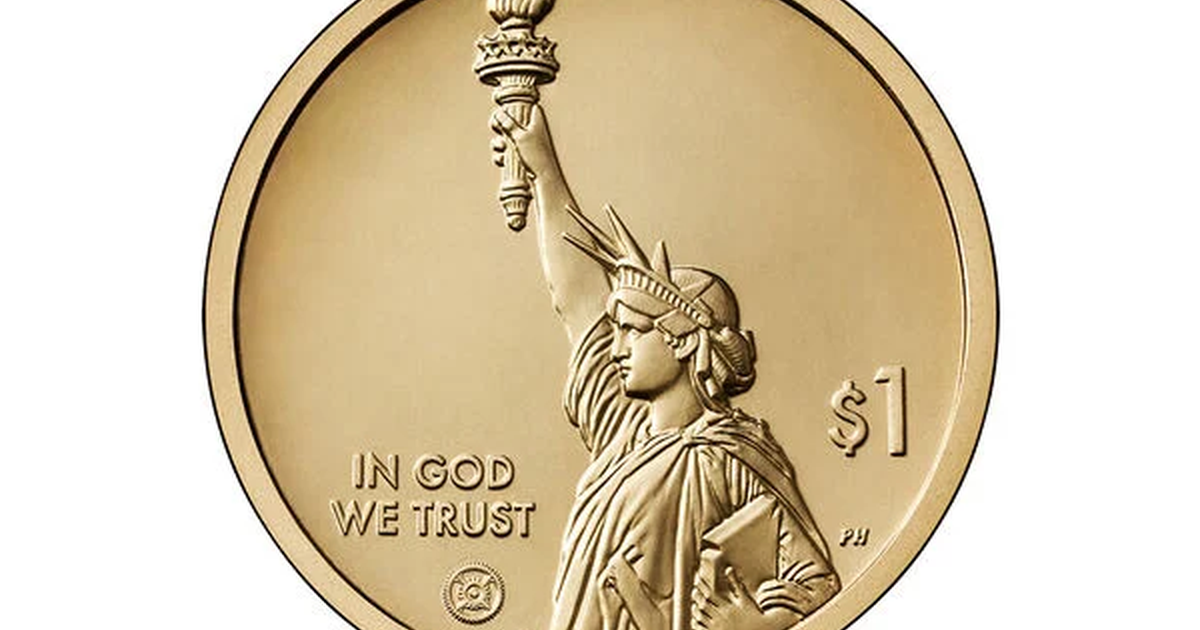
Tangible assets are roaring back. High-net-worth collectors are rethinking the things they can hold in a gloved hand, and rare coins sit dead center in that conversation. In my practice advising collectors who think like allocators, I spend as much time on liquidity, custody, and turnaround time as I do on eye appeal. This piece starts with a complaint thread on the PCGS collector forums — a six-day wait for order entry, and one Economy submission that sat untouched for 74 calendar days — and uses it to show how experienced advisors actually structure a numismatic allocation.
Why Tangible Assets Are Back in the Client Conversation
Every few years the pendulum swings back toward assets that exist outside the banking system. Rare coins appeal to allocators for reasons that have nothing to do with romance:
- No issuer risk. A graded 1927-D Saint-Gaudens $20 double eagle has no board of directors, no coupon, and no default risk. Its .900 fine gold content works out to roughly 30.09 grams of pure gold. But the numismatic value — the strike, the luster, the survival rate — is what you are really underwriting.
- Portability and privacy. A six-figure collection fits in a briefcase. No other asset class I manage offers that density of value per cubic inch.
- International recognizability. American gold eagles and double eagles, British sovereigns, and Swiss and French 20-franc pieces trade in nearly every major market on earth.
- Decorrelation from equity beta. Over rolling five-year windows, rare coin indices have shown only a modest relationship to broad stock market returns. That is precisely the property that makes an allocation interesting.
But tangible does not mean simple. A coin is only as liquid as the paperwork, the holder, and the grading service behind it. That is where the forum thread turns genuinely instructive for portfolio purposes.
Reading the Grading Pipeline Like a Cash-Flow Statement
The thread that prompted this piece started small. A collector’s order had arrived six days earlier and still had not been entered into the system. Others reported the same pattern: roughly a week from delivery to order entry, with Express labels helping only when the submission tier was clearly marked on the outside of the box. One long-time submitter summarized the drift bluntly:
Sadly “Express” now means about a 1 month turnaround. Regular has been taking 2 months, and economy 3 months.
Another collector posted the case I find most useful for teaching: an Economy order of 12 coins, received on 8-31-2026, that remained in Order Entry for 74 calendar days, or 53 business days, with the submitter’s revised expectation already slipping to the first week of January 2027. A separate poster described five coins stuck in QA for more than three months after a summer show submission — certification numbers that would not resolve, and a voicemail box that was always full.
When I walk a client through numbers like these, I do not frame them as a grievance. I frame them as an unmodeled carrying cost and an unmodeled liquidity gap.
The Time-Value Math Nobody Puts in the Spreadsheet
Consider a mid-five-figure collection submitted on an Economy tier. Assume $25,000 in declared value and a conservative 5% risk-free alternative. Seventy-four days of immobilized capital is roughly $250 in foregone yield — before you count the grading fee itself, the round-trip shipping and insurance, and the market risk you carried unhedged while the coins sat in a queue. On a $100,000 submission, the same delay costs about $1,000 in opportunity cost alone. That is not a rounding error in a portfolio context. For many collectors, it is a full year of storage fees.
The subtler cost is optionality. Coins in an unknown-status queue cannot be sold into strength in the market, cannot be pledged as collateral, and cannot be rebalanced. One poster in the thread compared the situation to having your coins in a safe deposit box. I would push back on that framing. A safe deposit box is a liquid position you can close in an afternoon. A submission in limbo is an illiquid position with an unobservable mark, which is a materially different risk profile.
The Liquidity Ladder I Recommend to Clients
I ask collectors to sort their holdings by how quickly each item converts to cash at a defensible price:
- Tier 1 — Immediately liquid (0 to 30 days): already-graded key dates in the “sweet spot” of the PCGS and NGC population reports, CAC-approved where possible, in honest mint condition, with recent comparable auction records from Heritage, Stack’s Bowers, or GreatCollections.
- Tier 2 — Liquid with friction (30 to 90 days): high-quality but common-date material, conditional rarities in top grades, coins whose collectibility leans heavily on the holder, and anything requiring consignment timing.
- Tier 3 — Illiquid (90 days plus): conditional and unique rarities, raw high-value material awaiting certification, and anything currently sitting inside a grading queue.
The rule is simple: never let Tier 3 exceed the portion of the numismatic allocation you could afford to leave untouched for a full market cycle. That forum thread is, in effect, a live demonstration of what happens when Tier 3 quietly grows larger than the owner intended.
Triage: Matching Submission Tier to Holding Period
Collectors who complain about turnaround times are frequently using the wrong tier for the coin. In my experience, the tier should be a function of the intended holding period and the coin’s liquidity — not of cost minimization.
- Keys and semi-keys you may need to sell within a year: highest available tier, or a show submission with in-person drop-off. Several posters noted that walkthrough and express orders get opened faster when the tier is clearly marked on the exterior packaging, and one collector reported 48-to-72-hour entry for coins dropped off directly at the Santa Ana facility.
- Conditional rarities where grade determines five- and six-figure value: the tier is worth the premium. A single point of grade on a 1901 Morgan dollar or a 1913-S Type 2 Buffalo nickel can represent a multiple of the grading fee, especially when strike and luster separate two coins from the same dies.
- Core, long-hold material: Economy is defensible, provided you accept that the coins are effectively frozen. Price that freeze into your cost basis.
- Anything you cannot replace: consider whether it needs to be submitted at all. A 1907 Saint-Gaudens High Relief or a 1933 double eagle — of which 445,500 were struck but nearly all melted under the 1933 gold recall order, and which last traded publicly around $18.9 million — carries risks that no turnaround guarantee addresses.
Custody, Shipping, and the Insurance Gap
The most expensive item in the thread was not a grading delay at all. It was a shipment. One collector described a bulk submission where the carrier tracking showed label created but not picked up, plus a second package that was scanned onto a delivery truck, marked out for delivery, and then could not be located by the driver. The submitter listed the declared value at $4,000 and asked, reasonably, whether the shipment was insured accordingly.
That is the question every allocator should be able to answer before sealing the box. Not after.
Declared Value Is Not the Same as Insured Value
Grading services and carriers both publish coverage terms, and those terms change. In my experience, the gaps that cost collectors real money are:
- Coverage caps well below declared value. Verify the current maximum per submission and per shipment on the service’s own current terms page, and buy supplemental fine-art or collectibles coverage for anything above it.
- Exclusions for “inherent vice,” inadequate packaging, or uninsured carrier handoffs. The moment your box leaves your hands and enters a carrier network, your recovery depends on that carrier’s liability schedule — not on the grading company’s reputation.
- Homeowner and renters policy sub-limits. Many policies cap collectibles at a token amount. A scheduled rider is inexpensive relative to the exposure.
- No coverage at all for market loss during transit. Insurance restores your cost basis, not the appreciation you would have captured in a rising market.
My operational standard for clients is unglamorous and effective: photograph the sealed package and the tracking label, use a signature-required service with declared value for anything above a few thousand dollars, keep the submission invoice and the tracking record together, and reconcile the delivery scan against the service’s received date. The collectors in that thread who did exactly that were the ones who could reconstruct precisely where their coins went missing.
Documentation and Photography as Portfolio Infrastructure
Several posters raised a point I consider central to liquidity: imaging quality. One long-time submitter observed that photography was once a major reason to choose a particular service and is now, in his words, deplorable, while a competitor’s images have become world class. Another poster simply posted images and let them speak.
This matters financially. High-resolution imagery is your pre-sale marketing, your insurance documentation, and your provenance record, all at once. Raking-light shots that reveal strike detail and luster let a buyer judge the coin without ever touching it. Services with superior imaging options hand you an asset you can list, cross-shop, and sell without re-handling the coin. When I review a collection for a client, I treat missing or poor images as a liquidity defect and price it accordingly.
Documentation Checklist for Every Material Coin
- Certification number, service, grade, and designation — for example, MS65, PR68 DCAM, or a Mint Error or Variety attribution.
- Date, mint mark, and, for Morgan and Peace dollars, the relevant VAM die variety designation from the Van Allen-Mallis cataloging system. A 1901 Morgan or an 1878-S with a notable rare variety can trade at a substantial premium to the same date and grade without one.
- Full-coin, obverse, reverse, and edge photography in raking light, retained independently of any service’s archive.
- Purchase invoices and a continuous chain of ownership. Provenance is the single most reliable value multiplier in numismatics, and it cannot be reconstructed after the fact.
- A current mark derived from recent comparable auction results — not from a dealer’s retail sheet or a price guide’s high ask.
Grading Standards, Population Data, and Mark-to-Market Risk
The thread also surfaced a debate that every serious allocator must settle for themselves: whether grading standards have drifted, and what that drift does to the marks in a portfolio. Two coins can share a date, a mint mark, and a holder, yet differ enormously in strike, luster, and eye appeal — and one may carry original patina while the other has been dipped. Population reports tell you how many coins sit at each grade. They say nothing about beauty. That gap is where collectibility lives, and it is why I never treat a slab label as a price. So treat coins as one sleeve of a diversified tangible allocation, size the illiquid tier honestly, document everything, and let the queue teach you what your spreadsheet did not.
Related Resources
You might also find these related articles helpful:
- The Arbitrage Guide: How PCGS Express Delays, Cross-Grading Spreads, and Raw-to-Slab Math Create Fast Profit in 2026 – There’s real money in the numismatic market, but only if you know where the price gaps sit. Here’s how I rea…
- Coins Stuck in “Order Entry” for 74 Days: An Insurer’s Guide to Scheduling, Appraising, and Protecting Your Numismatic Collection – A standard homeowner’s policy won’t come close to covering the full numismatic value of a rare collection. L…
- The Arbitrage Guide: Flipping 200 Tries Dime Search for Fast Profit – Raw‑to‑Slab, Cross‑Grading & Wholesale Strategies – There’s real money sitting in the numismatic market, but only if you know where the price gaps open up. Let me sho…


